How To Trade With A Wandering Trader In Minecraft
Learn how to trade with the Wandering Trader in Minecraft, including how to find them, what items they offer, and tips to make the most of their rare deals.

Shahrukh Sial is a Gaming Content Strategist at Sparked Host. He identifies his own strategic outlines through deep research to cover game guides, tips, and updates that help players improve their skills and enjoy a better gaming experience.
How To Trade With A Wandering Trader In Minecraft
In Minecraft, not all merchants stay in villages. One unique character is the wandering trader, a mysterious mob that appears randomly in the Overworld, often accompanied by two trader llamas. These traders offer limited but sometimes exclusive items in exchange for emeralds. Although their visits are brief, understanding how wandering trader trades work can help players collect hard-to-find resources.
But how exactly do you trade with a wandering trader? What sets them apart from villagers, and what happens if you choose to disable or even attack one? This guide explains everything from trading and spawning to despawning and behavior patterns.
Let’s explore how to make the most of this nomadic merchant’s surprise visits.
What Is A Wandering Trader In Minecraft?
A wandering trader is a passive wandering trader entity that appears near players and offers small trade menus in exchange for emeralds.
Unlike villagers, wandering traders are not tied to a job site block or profession and cannot upgrade through the novice master trade system. Instead, wandering trader bring with them a wandering trader's inventory filled with renewable and unique items like rare dyes, decorative blocks, and plants.
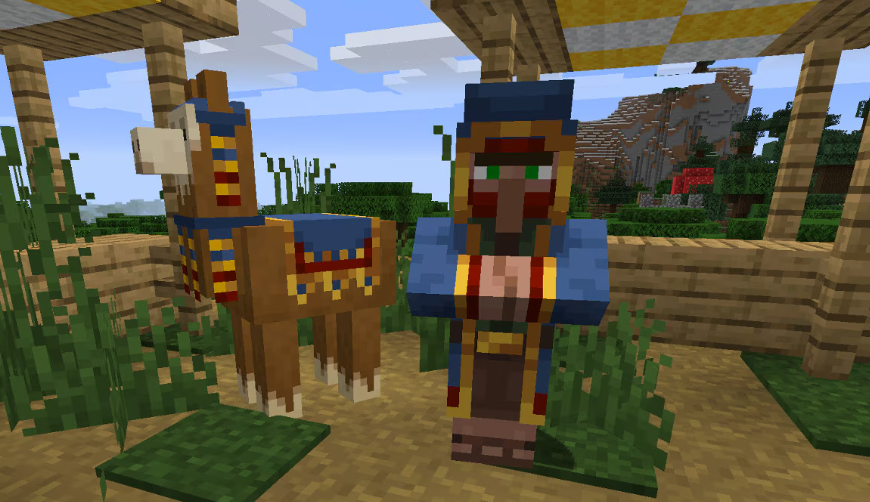
Dressed in a blue robe and often guarded by leashed trader llamas, the wandering trader arrives without warning.
Each spawn attempt immediately fails if the area lacks a valid mob spawning location, but if successful, two trader llamas spawn leashed to the trader.
While their arrival is random, a wandering trader likes to spawn near the closest bell, especially around player bases.
The wandering trader flees from danger and drinks potions such as invisibility and milk—behavior that makes the wandering trader mob more elusive. These wandering traders drink potions twice—once at night and again when threatened.
Wandering traders are considered friendly, so if you're adjusting in-game sound settings, lowering this category will reduce the sounds made by these traders and their llamas.
Wandering Trader Trades
Wandering traders in Minecraft offer a small but unique set of trades that differ greatly from traditional villagers. While wandering trader don’t provide the depth of the novice master trade system, they compensate by offering rare or otherwise hard-to-obtain items, especially for players who are far from biomes where these resources are typically found.
How Wandering Trader Trades Work:
-
Emeralds Required: Every trade involves emeralds as currency. Players must gather emeralds through mining, villager trading, or looting to interact with a wandering trader.
-
No Trade Progression: Unlike villagers, wandering traders don’t gain experience or unlock new trades over time. Their trade menu remains fixed from the moment they spawn.
-
Limited Inventory: The trader typically offers 6 random trades from a pool of over 70 potential items. These items rotate with each new spawn.
-
Trade Locking: Each available item can only be traded a limited number of times before the wandering trader joins that trade. Once locked, you can’t purchase more of that item from that trader.
-
Despawn Time: After 40–60 minutes, the trader will despawn, taking their trades with them. This means every visit is a one-time opportunity.
Examples of Common Trades:
Wandering traders can offer:
-
Rare Plants and Flowers: Blue Ice, Ferns, Vines, Lily Pads, Bamboo, Coral Blocks
-
Dyes: Blue Dye, Light Gray Dye, Lime Dye, and more
-
Blocks: Packed Ice, Sand, Podzol, Dripstone Block
-
Banner Patterns: Exclusive Globe Banner Pattern
-
Mob Loots: Nautilus Shells, which are essential for crafting conduits
Why These Trades Matter:
Wandering traders offer trades villagers can't, offering access to biome-specific items that would otherwise require exploration or special tools. For example, players in desert or plains biomes can get jungle saplings or coral blocks without traveling long distances. This makes the wandering entity an important part of the early to mid-game resource economy.
Pro Tip:
Before trading, check if the items offered are unique to your current biome or difficult to obtain. Since trades lock after a few uses, prioritize the most valuable options.
How to Trade With A Wandering Trader
To interact, simply approach and right-click (or use the interact button) to open the trading menu. While the inventory is small, items like the globe banner pattern are exclusive to wandering trader trades. Unlike villagers, there’s no trading progression. Most existing trades will lock after a few uses, and previous trades will not refresh.
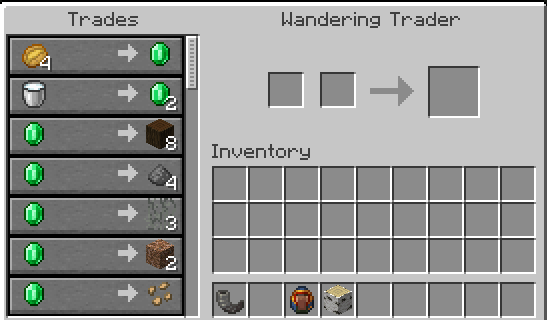
If a player successfully trades, it counts toward successful trade statistics but has no impact on the trade system. These trades are a one-time opportunity until the wandering trader despawns.
The wandering trader locks each trade after a limited number of uses, meaning players must choose wisely. This mechanic adds an element of strategy, especially when pursuing hard-to-find materials.
While villagers offer more complex progression and benefits through the novice master trade system, the wandering trader provides immediate access to specific items that may otherwise take much longer to obtain. In this way, the trader succeeds in serving a different role within the Minecraft economy, offering players alternatives to traditional trading paths.
How To Find A Wandering Trader In Minecraft
The game attempts to spawn a wandering trader every 20 in-game minutes near a random player. If there is a valid mob spawning location within a 48-block radius, the spawn may succeed. The chances increase with each failed attempt: 25%, then 50%, then 75%. Once spawned in, wandering traders appear with two leashed trader llama companions.
They only spawn in the Overworld, avoiding deep dark biomes. While it’s rare, two wandering traders may appear at once. Placing a bell in your base's initial spawning target location increases the chance of a visit.

Players looking to maximize their interaction with wandering traders should build their base in well-lit, open areas to encourage valid spawning conditions. Having a bell near the center of the base further improves the odds, since the wandering trader prefers these spawn points.
Additionally, the game includes wandering traders in various mechanics, such as advancement tracking and mob behavior patterns.
What Does the Wandering Trader Drop?
While the wandering entity isn’t known for generous loot, there are still a few unique drops and mechanics tied to its demise. If the wandering trader dies event is triggered during combat, such as when the trader is killed before finishing a potion, the following drops are possible:
-
Milk Bucket: Has an 8.5% chance to drop if the trader is killed while holding or drinking milk. This chance increases by 1% per level of Looting.
-
Potion of Invisibility: Has an 8.5% drop chance if the trader is killed while holding or drinking the potion, also increasing by 1% per Looting level.
Additionally, the wandering trader is also a source of leads, which are more reliably obtained. Since the trader always spawns with two trader llamas leashed to it, those leads will break and drop at the location of the llama if either the trader or the llamas are killed, or even if they get separated.
Can You Convert a Wandering Trader?
In vanilla Minecraft, it is not possible to convert a Wandering Trader into a regular villager. While they may look somewhat similar, the two are completely different entity types with separate mechanics, behaviors, and purposes.
Why Conversion Isn’t Possible:
-
Different Entities: The wandering entity is distinct from villagers and cannot be assigned a job or housed in a village.
-
No Profession System: Unlike villagers, wandering traders do not use workstations and are not part of the novice master trade system.
-
Despawning Behavior: Even if you trade with a wandering trader, they will eventually despawn after a fixed amount of time and cannot be bred or permanently housed.
What You Can Do Instead:
-
Create a Villager Breeder: If your goal is to generate more villagers with professions, it’s better to use a breeder setup in a village biome.
-
Build a Wandering Trader Farm: While you can’t convert them, you can create open, flat, well-lit spaces where wandering traders are more likely to spawn naturally.
-
Trade While You Can: Take advantage of the trader’s brief stay by grabbing exclusive items quickly. Once the trades lock, you’ll lose access to them.
In short, wandering traders remain nomadic and unconvertible. They serve a different function—providing spontaneous, low-volume trades that complement the more structured villager trade system.
Disabling Wandering Trader Spawns
To stop wandering traders from spawning, use the command:
/gamerule doTraderSpawning false
To enable them again:
/gamerule doTraderSpawning true
This is useful for reducing passive mobs or controlling gameplay on custom maps. Disabling them won’t affect other mob types but will stop all wandering trader appearances.
In server environments, disabling wandering traders can prevent interference with map aesthetics or technical builds. However, doing so removes a unique element from the survival experience that includes wandering traders in the broader fabric of Minecraft’s living world.
Is It Worth Killing a Wandering Trader?
Yes, killing wandering traders and their trader llamas has no penalty. Iron golems won’t retaliate, and wandering traders do not convert into zombie villagers. However, doing this removes access to their wandering trader trades, and any existing trades are lost.
The wandering trader dies entity and wandering trader dies mob events occur when the trader is killed, triggering death sounds under the friendly creatures and removing them from the world without leaving behind anything particularly valuable.
Wandering trader killed drops nothing of real importance, but llamas may drop leather and leads. Some believe wandering traders avoid areas where they were recently killed, though this is not confirmed. A wandering trader's dies may discourage future spawns nearby, though behavior is largely governed by randomization in spawn logic.
For players seeking to collect leads or reduce mob clutter, killing them may serve a purpose. Yet, from a lore and exploration standpoint, it often makes more sense to preserve these unique traders.
Wandering Trader Behavior and Trivia
-
A wandering trader despawns after 40 in-game minutes if not interacted with.
-
Trader wanders with each trader llama, and sometimes an early trader llama may appear before a bug fix.
-
The trade system is limited and does not level up.
-
A wandering trader despawns when it enters unloaded chunks or switches dimensions.
-
Wandering traders offer renewable resources unavailable elsewhere.
-
When a player successfully trades, it counts toward the friendly creatures sound category statistic.
In terms of Minecraft's broader trading mechanics, the wandering entity exists in contrast to the structured, progression-based villager system. While villagers follow the novice master trading system, wandering traders offer randomness, convenience, and spontaneity.
Conclusion
The wandering trader adds spontaneity to Minecraft with exclusive trades and unique behavior. While their trading system lacks depth, they can still help collect rare or aesthetic items. Whether you interact with them, ignore them, or decide that killing wandering traders fits your strategy, knowing how they work lets you make better decisions.
Keep an eye out for each trader llama, they're often the first sign that a wandering trader wanders nearby.
The wandering entity provides a refreshing break from the structured village economy. By combining random trades, distinct behavior, and unique spawn mechanics, this trader offers players a different kind of interaction—one where opportunity and timing matter more than leveling up.