How to Get Explorer Maps from Abandoned Camps
Discover how to locate and obtain explorer maps from abandoned camps with this detailed step-by-step guide.

Shahrukh Sial is a Gaming Content Strategist at Sparked Host. He identifies his own strategic outlines through deep research to cover game guides, tips, and updates that help players improve their skills and enjoy a better gaming experience.
The fastest way to get Explorer Maps from an Abandoned Camp is by looting the surface barrels for biome-specific maps, then digging up the rare hidden Copper Chest to secure high-tier structure maps.
Overview: Abandoned camps and Explorer maps
An Abandoned Camp is a handmade Minecraft surface set piece by Mojang, featuring wool tents, cushions, campfires, and barrels left behind by past travelers, with 18 biome-specific variants. Introduced in the Third Drop of 2026, it is one of the most reliable ways to get explorer maps from abandoned camps: loot the surface barrels for biome-specific maps, then carefully dig beneath the surface containers to uncover the rare Secret Copper Chest that can drop high-tier structure maps.
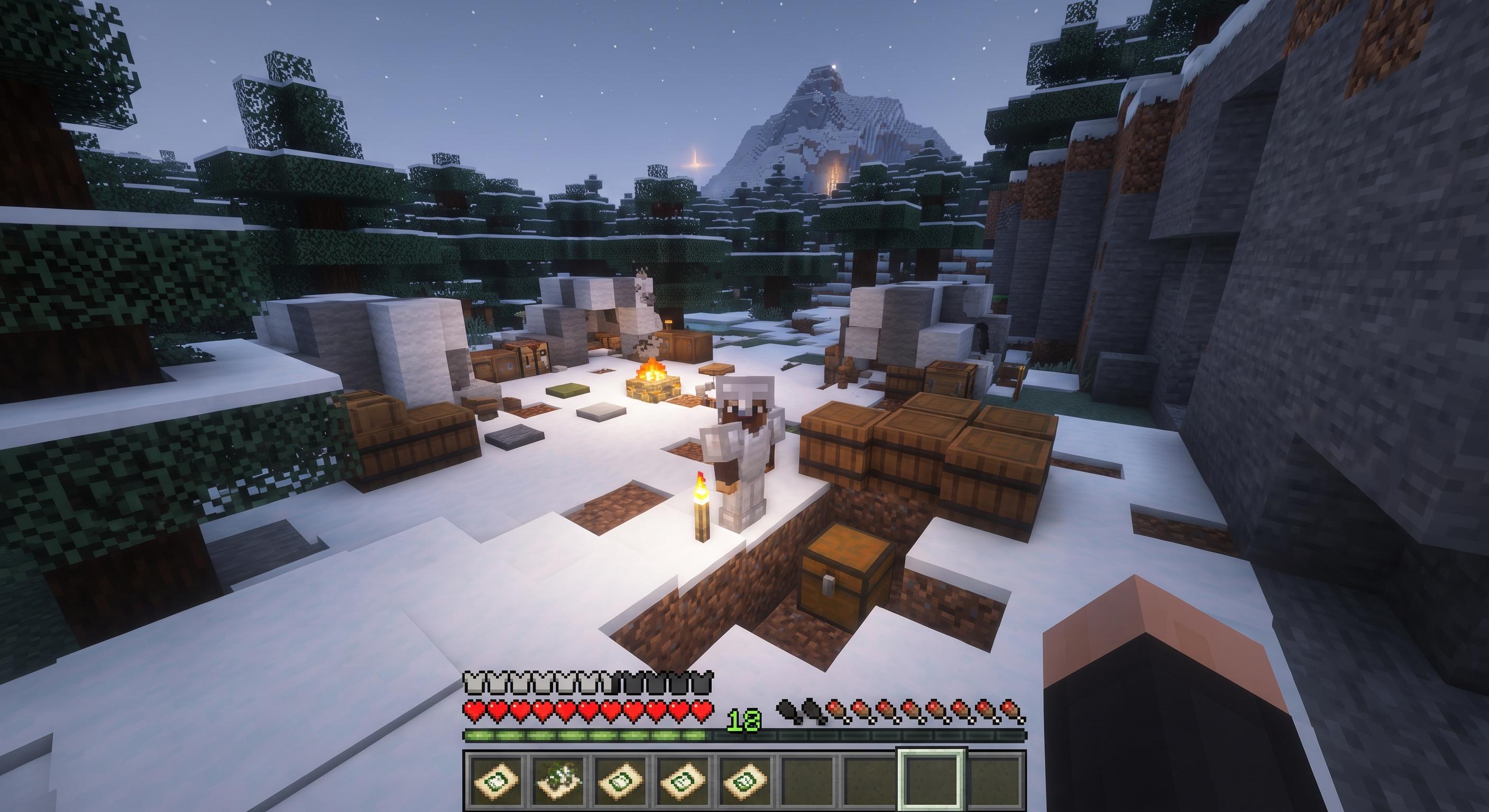
These maps display specific structure or biome icons and directional indicators that guide you straight to hidden coordinates across your world seed, making them valuable for players who want faster, more reliable treasure hunting and exploration.
Minecraft now has 16 types of Explorer Maps. By searching these camps, players can acquire two distinct categories of maps:
-
Biome Maps: Point to specific biomes like Birch Forests or Pale Gardens.
-
Structure Maps: Point directly to end-game hazards like Ancient Cities and Trial Chambers.
This guide focuses on the loot system behind common barrels and the hidden secret chest, the edition-specific differences that affect what you can find, safe extraction strategies, and how to use camp maps efficiently by pairing them with nearby structures. Each camp can generate in up to 8,640 unique configurations.
Loot Mechanics in an Abandoned Camp
Abandoned Camps utilize a dual-container looting system split between surface storage and buried treasure stashes. Surface barrels and common chests house basic materials and biome maps, while a rare, hidden Secret Copper Chest (typically oxidized copper) contains high-tier structure maps.
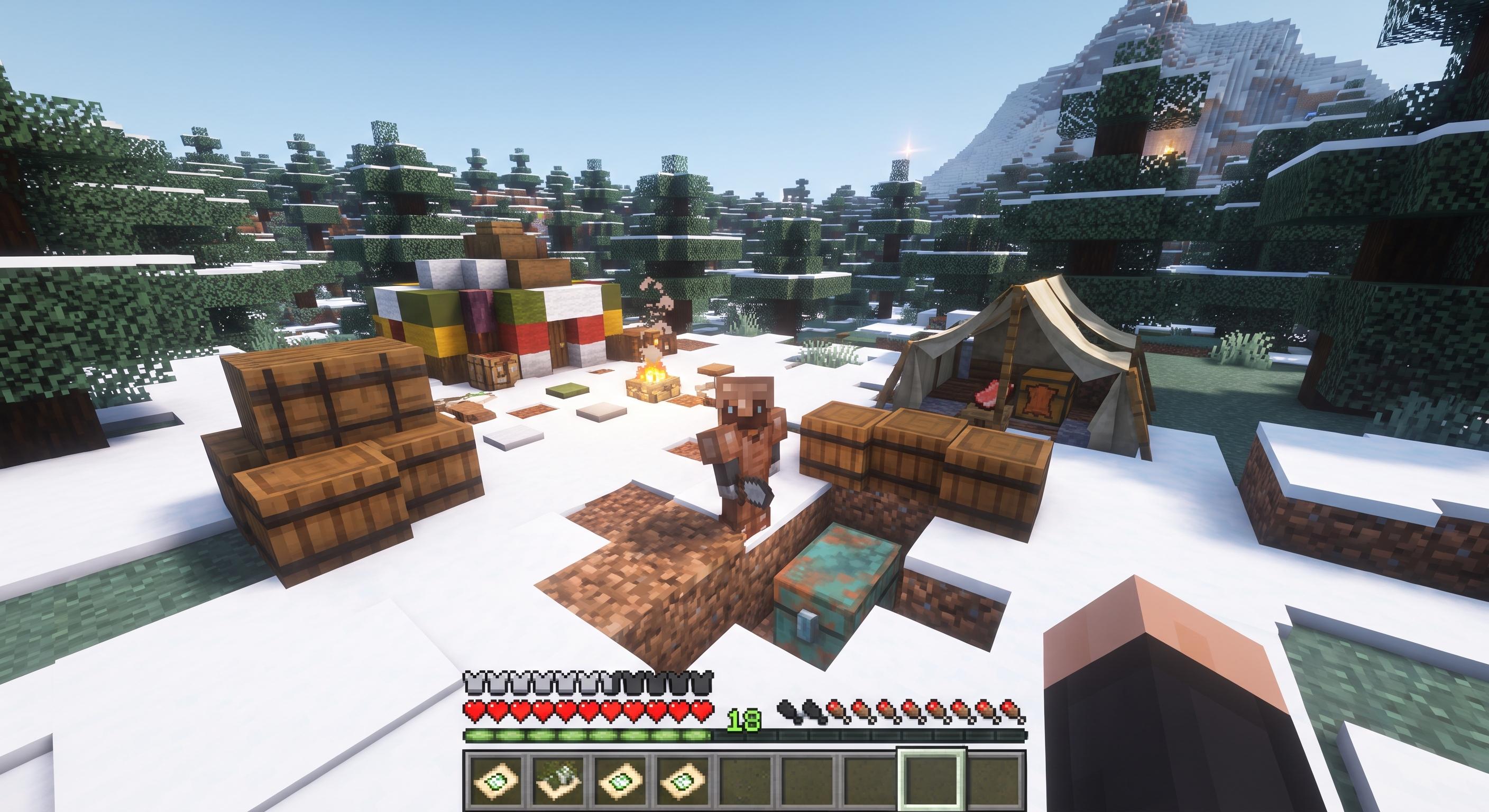
The typical drop rate for a structure map is a flat 14.3% (1 in 7 chance) per Secret Copper Chest. Because these hidden copper containers are highly sensitive to tool damage, you must never blindly mine out the ground with an iron or diamond shovel; hitting a copper container with incorrect tool speeds can accidentally break it and instantly despawn the unstackable loot inside.
Opening one can also briefly freeze the game while the map coordinates generate, so leave space in your inventory and wait a moment before moving on, since these finds can point you toward valuable loot early on.
Chests: common chests vs secret chests (common chests)
-
Common Chests & Barrels: Found resting in plain sight inside or directly adjacent to the wool tents. They contain standard adventuring gear, raw food, and the baseline Abandoned Campsite Map.
-
Secret Chests: These are textured as weathered or oxidized copper blocks. To unearth them safely, first check directly beneath the placement spots of surface barrels, then clear the gravel patches flanking the center campfire so you can search the most likely hiding spots without unnecessary risk.
Edition Differences: Java Edition and Bedrock Edition (java edition, bedrock edition)
In Java Edition, Abandoned Camps strictly check surface validation rules, meaning they will never spawn clipping into deep ravine walls. In Bedrock Edition, generation bugs can sometimes cause parts of the tents to overwrite steep mountain ledges.
Furthermore, Java Edition snapshots explicitly list the item ID as minecraft:abandoned_camp_map, whereas Bedrock Edition text formats render it natively as minecraft:abandoned_campsite_map. Always verify your version before executing coordinate commands.
Explorer Map Types Found in Abandoned Camps (explorer map)
The map pool is strictly divided by container rarity. Explorer Maps can also be obtained by trading with Cartographer villagers, though this guide focuses on camp loot and how those drops help you locate specific destinations. Surface chests yield biome pathways, while copper chests yield rare subterranean vaults.
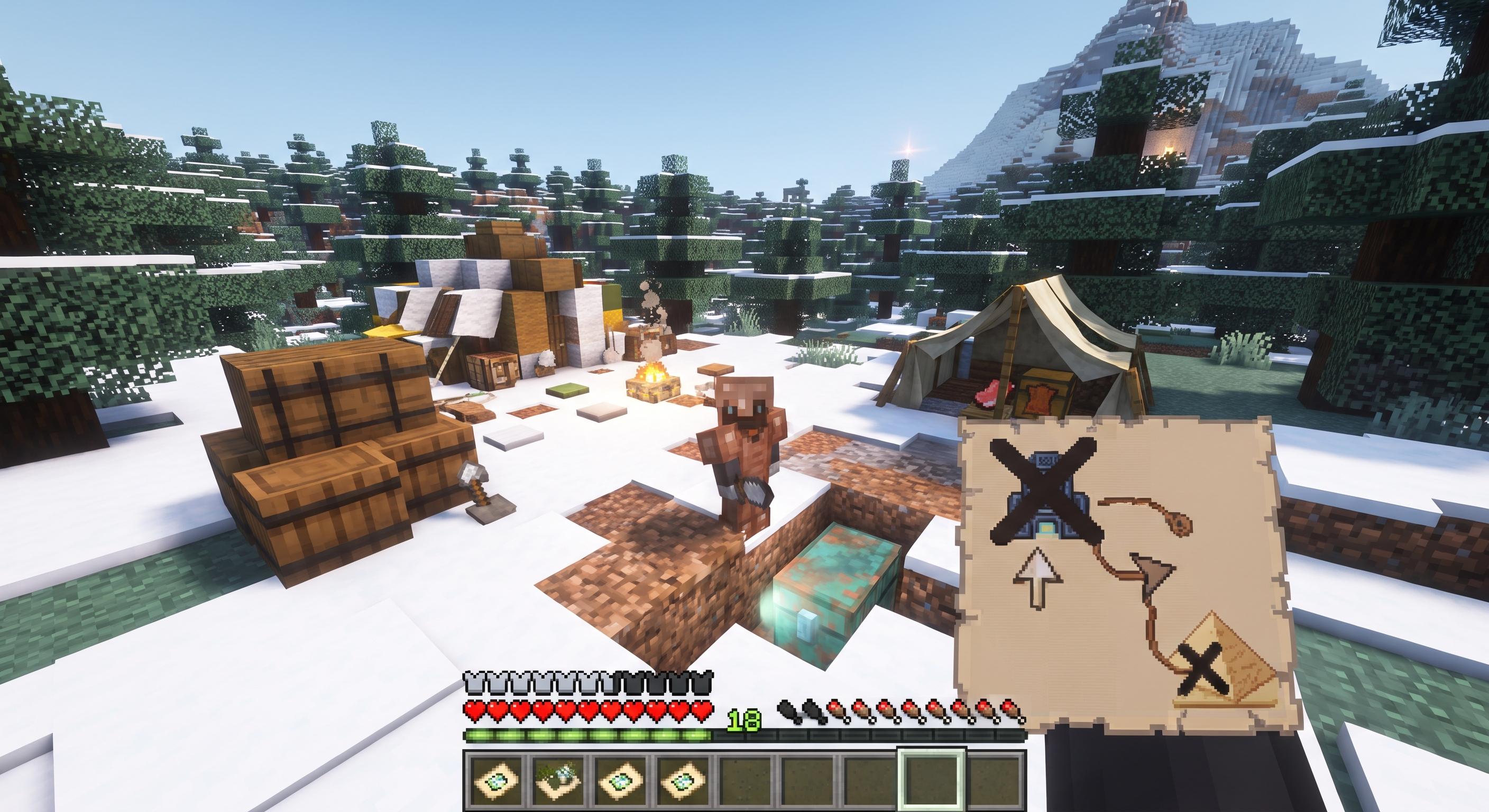
Ancient City Map (ancient city map, ancient city)
Points directly to the dark, deep-slate central portals of the nearest Ancient City. This map has a 1-in-7 drop rate exclusively inside Secret Copper Chests. Be fully prepared to face pitch-black visibility and Warden spawning rules when traveling along this path.
Buried Treasure Map (buried treasure map)
Helps players explore coastlines and locate buried treasure more efficiently, including caches with iron, gold, and Hearts of the Sea buried beneath sand. Shipwrecks remain the primary source, but camp variants spawning in beach or swamp ecosystems can still lead to valuable early-game loot and drop these maps at slightly elevated rates.
Desert Pyramid Map (desert pyramid map, desert pyramid)
Marks the location of the nearest sandstone Desert Pyramid. These structures are prized for valuable loot, especially TNT. It drops from the Secret Copper Chest at a standard 14.3% rate, helping players locate the nearest desert pyramids without hours of tedious desert biome navigation.
Abandoned Campsite Map and Biomes (abandoned campsite, dappled forest)
This map variant highlight's locations of other active campsites across a pool of 8 specific biomes. Notable examples include the newly added autumn-themed Dappled Forest, where poplar trees, shelf mushrooms, and red shrubs flourish natively. Depending on the map pool, linked biome destinations can also point toward a Pale Garden or plains setting when that variant is tied to the surrounding terrain.
Other Maps Available in Camps
-
Buried Mineshaft Map: Guides you to underground rail networks (14.3% drop rate).
-
Warm Ocean Ruins Map: Points to underwater sand clusters containing sniffer eggs.
-
Jungle Pyramid Explorer Map: Leads directly to a jungle temple, and some players look for this jungle pyramid explorer option through broader map-finding routes.
-
Woodland Mansion** Explorer Map:** Leads directly to a woodland mansion.
-
Ocean Monument Explorer Map: Guides you to an ocean monument.
-
Swamp Hut Explorer Map: Points to a witch hut in the swamp.
-
Plains Village Map: Marks a plains village as a destination-specific map you may obtain through broader gameplay sources.
-
Savanna Village Map: Marks a savanna village as a destination-specific map you may obtain through broader gameplay sources.
-
Snowy Village Map: Marks a snowy village as a destination-specific map you may obtain through broader gameplay sources.
-
Taiga village maps: Mark taiga villages as destination-specific maps you may obtain through broader gameplay sources.
Best Field Strategy for Looting Abandoned Camps
-
Approach Cautiously: Do not use explosives or fire weapons near the camp to avoid destroying fragile containers.
-
Clear Surface Containers First: Empty out all visible barrels and wood chests to secure your food and food resources immediately.
-
Dig Methodically: Strip away the topsoil block-by-block under the barrel placement coordinates using an iron shovel.
-
Mark Cleared Camps: Place a torch directly on top of the extinguished campfire to signal that the hidden copper chest has already been extracted.
Pairing Camps with Nearby Structures (desert pyramid, ancient city)
To maximize your resource runs, always coordinate your routes to connect multiple generated features. A Mineshaft Map can give a direct lead on nearby underground loot routes. If your camp drops a Desert Pyramid Map, align your compass headings to check for intersecting Trail Ruins along the desert border.
Camps found inside the Dappled Forest are perfect collection hubs due to their high concentration of surrounding wood resources and open clearings. In a bamboo jungle, camp decoration can also shift to match the surrounding biome. If a Pillager Outpost is visible from the camp, use your camp's tent structure as temporary tactical cover to snipe the outpost captains safely.
Tips For Writing Edition-Specific Guides (java edition, bedrock edition)
When documenting your world seeds or sharing guides online, always specify the version clearly. The National Mine Map Repository, which holds records for over 275,000 closed mines, is a good real-world reminder that precise map labeling matters:
-
Put [Java 26.3+] or [Bedrock 1.21+] directly inside your headings.
-
Include clear screenshots showing whether the UI features the Java F3 coordinate overlay or the Bedrock screen position toggle.
-
Note that update 26.3 adds dedicated map items with unique icons, making Explorer Maps easier to identify in your inventory.
-
Always note snapshot item name variances (campsite_map versus camp_map) to keep your readers from encountering command syntax errors.
FAQ Ideas About Explorer Maps
Can explorer maps be zoomed?
No. Unlike standard player-crafted maps, pre-made Explorer Maps are locked at a fixed scale (usually Level 2 or 3 magnification) and cannot be expanded using a cartography table.
How many explorer map types exist?
Following the 2026 Third Drop update, there are now 15 total explorer-map destinations obtainable through gameplay, combining the 8 biome variants and 7 core structure variants.
Where to find buried treasure maps?
You can find them reliably in underwater Shipwreck chests, Ocean Ruins, or occasionally inside surface Abandoned Camp barrels located near ocean shorelines.