Exploring the Minecraft Autumn Update Dappled Forest Features
Discover the new features of the Minecraft Autumn Update's Dappled Forest. Explore biomes, mobs, and gameplay changes. Read more to enhance your adventure!

Shahrukh Sial is a Gaming Content Strategist at Sparked Host. He identifies his own strategic outlines through deep research to cover game guides, tips, and updates that help players improve their skills and enjoy a better gaming experience.
The blocky landscape is about to undergo another massive transformation. Following the conclusion of Minecraft Live 2026 at TwitchCon Europe, Mojang Studios surprised the community by revealing the upcoming Minecraft autumn update, dappled forest additions. This highly anticipated Fall 2026 update focuses heavily on atmospheric exploration, environmental storytelling, and long-requested building blocks.
Before players get their hands on this autumn realm, the previously announced Chaos Cubed update (Content Drop 2) will launch on June 16, 2026. This article was generated right as the news broke to give players the most accurate breakdown of the upcoming game.
Preceding the Autumn Drop: The Chaos Cubed Update in June
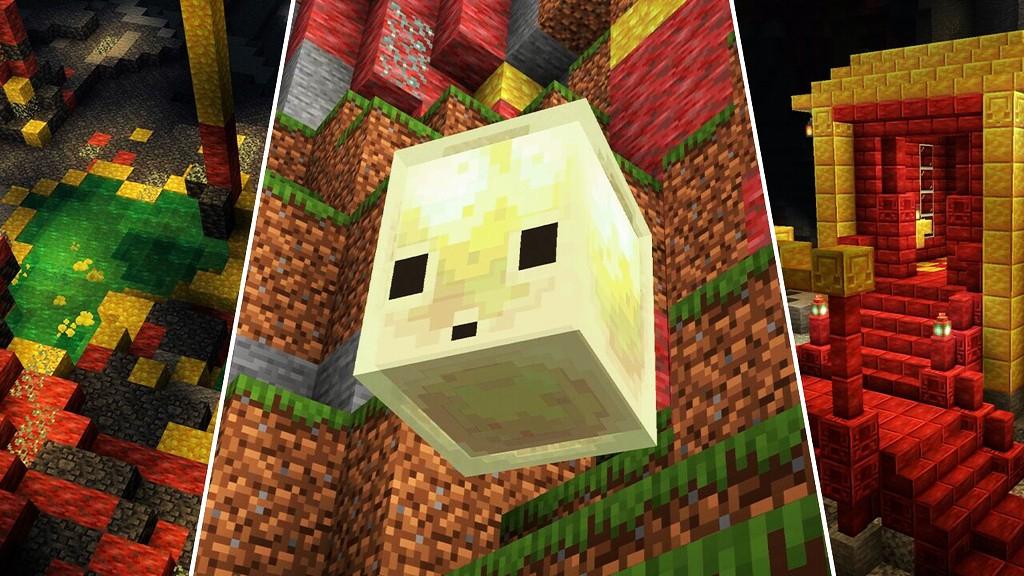
The road to the autumn biomes begins in June. Specifically, on June 16, players will gain access to the underground dangers of sulfur caves. Deep within these sulfur caves, dangerous volcanic activity will generate unique geologic hazards. Explorers will need to navigate through fields of jagged sulfur spikes and toxic sulfur springs.
These hot sulfur springs emit active gas bubbles that rise to the water surface. If players stand directly over these thermal hazards, the rising gas bubbles can trigger a distinct nausea effect, distorting the player's vision. Furthermore, volatile geysers shoot superheated steam upward from underneath the volcanic rock. These high-pressure geysers act as a bouncing pad, launching any careless entity high into the air.
Survival in these caves requires caution because sulfur caves house the volatile sulfur cube. The sulfur cube behaves similarly to TNT, creating a localized blast if triggered. Unlike normal TNT, the sulfur cube in Minecraft responds dynamically to kinetic impacts. When an explosion occurs nearby, a sulfur cube will explode and chain-react, causing nearby blocks to bounce outward in a physical wave. Players can clear these blocks by scooping up the thermal fluids with a water bucket, or they can carefully harvest the blocks to experiment with industrial redstone contraptions.
Defeating a sulfur cube or mining out the core of sulfur spikes allows players to collect potent sulfur. This potent sulfur dust serves as a high-tier brewing and crafting ingredient. By using potent sulfur, players can create specialized splash potions or modify mechanical blocks.
The Fall 2026 Update: What We Know So Far
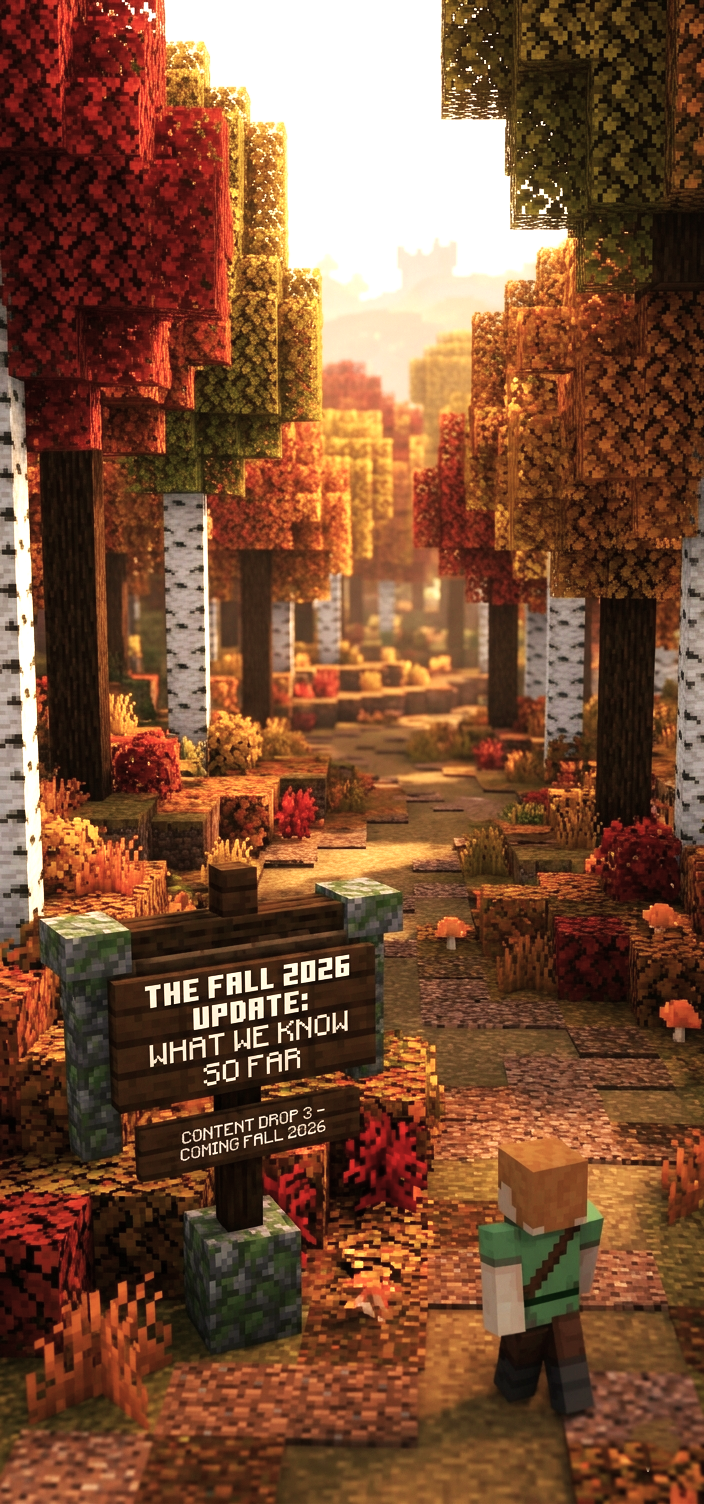
Mojang Studios continues to follow its agile development strategy by releasing smaller, more frequent content drops instead of a single massive annual update. This approach ensures that the game receives fresh mechanics, blocks, and biomes throughout the year without forcing players to wait twelve full months.
While this autumn-themed update is officially classified as Minecraft Content Drop 3, its development timeline is already taking shape. Players can expect the first round of testing environments, including Java Edition Snapshots and Bedrock Edition Previews, to roll out in the late summer months of 2026. This testing phase will allow the community to provide direct feedback on block textures, biome generation, and item balancing before the official fall release.
Exploring the Dappled Forest: Minecraft's New Autumn Biome
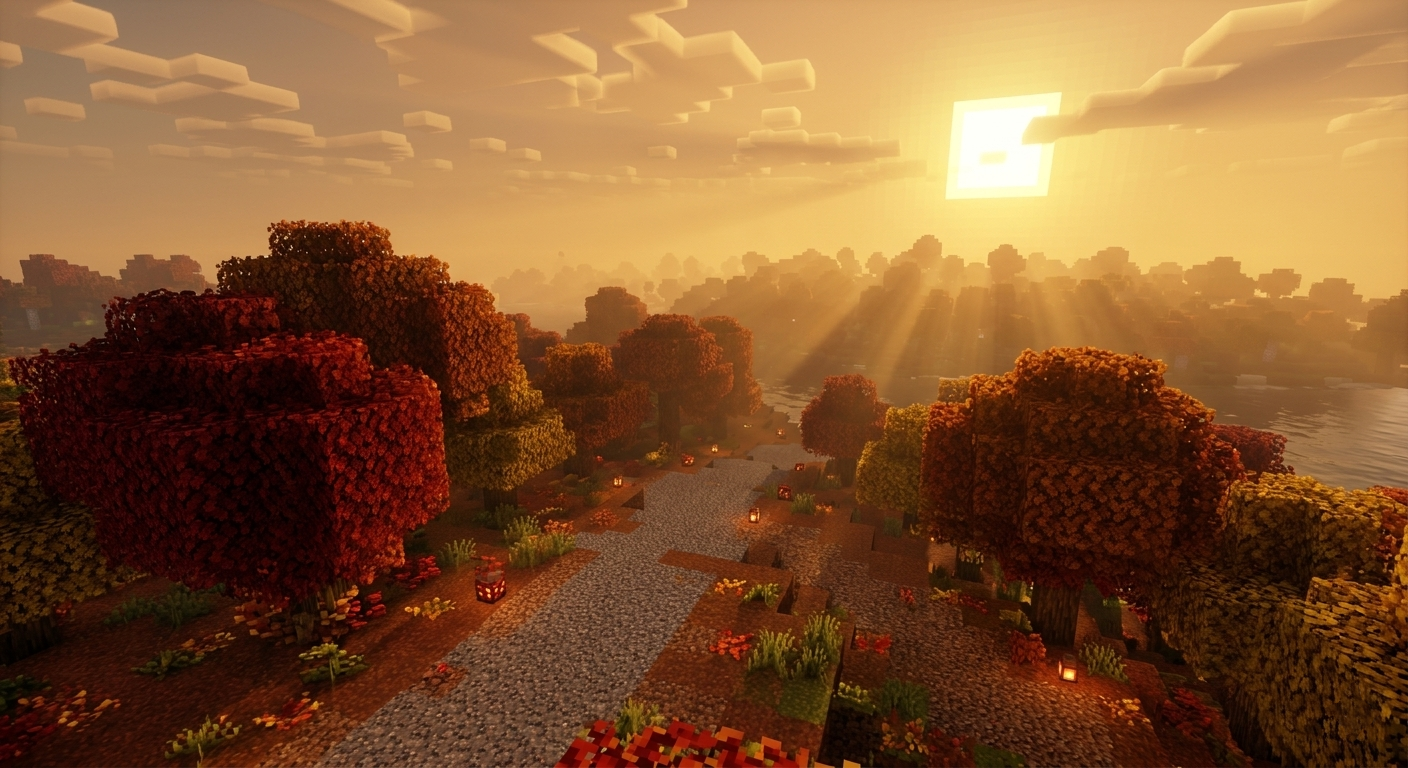
The crown jewel of the announcement is the dappled forest in Minecraft. The visual design of this brand-new biome draws heavy inspiration from the dense, colorful autumn landscapes found in Michigan and rural Sweden.
Unlike traditional forest biomes that rely on uniform green shades, the dappled forest in Minecraft features a vibrant canopy of red, orange, and yellow foliage. The leaves create a dense overhead ceiling that filters sunlight, casting warm, shifting shadows across the forest floor.
A key feature of this biome is the introduction of Red Shrubs. This new flora serves as a critical mechanic for builders and decorators. Unlike standard leaves or grass that dynamically shift color based on the biome's climate data, Red Shrubs retain their permanent, rich red hue. Players can break them with shears and replant them in deserts, oceans, or underground bases without losing their bright crimson look.
Local Wildlife: Baby Chickens and Mobs
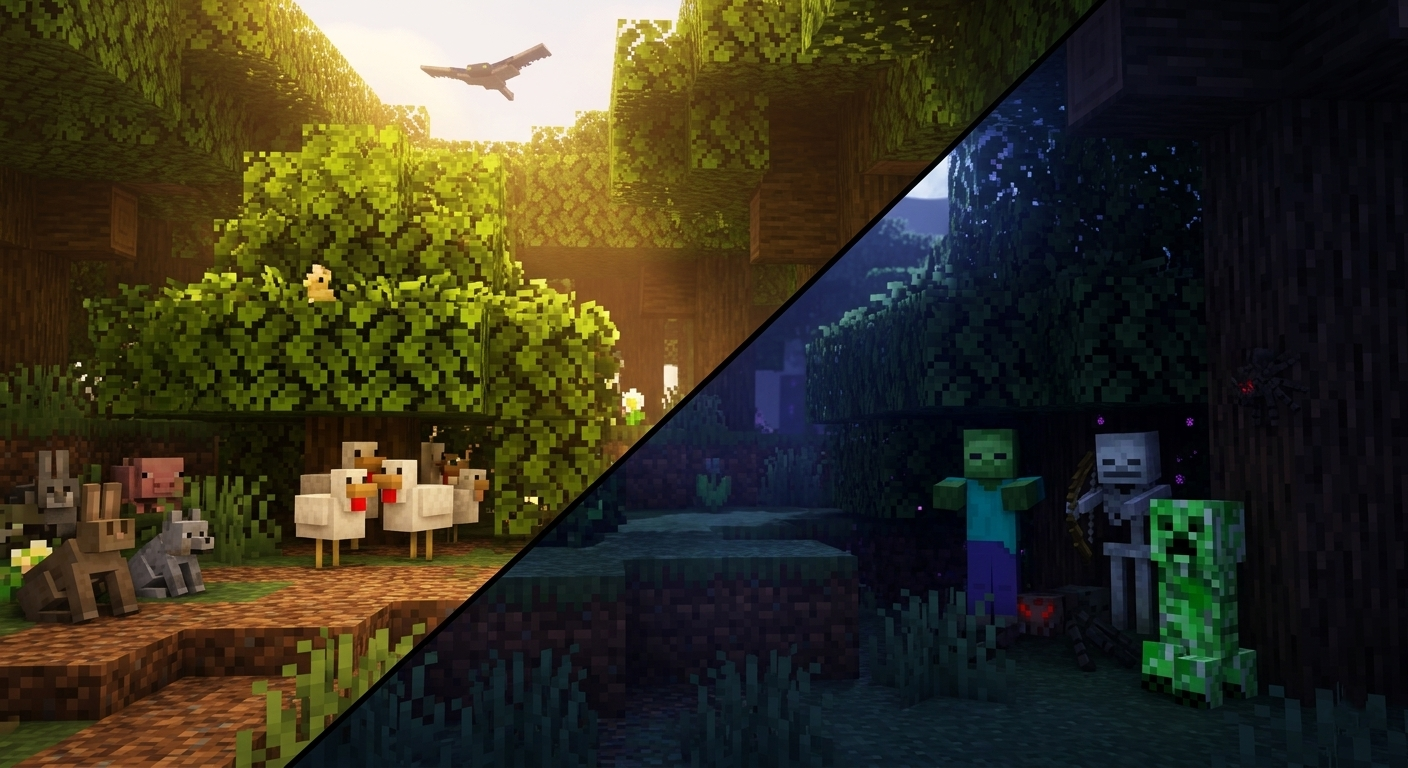
The warm forest floor provides a safe environment for passive mobs. Players exploring the area will frequently encounter groups of wildlife, including a baby chicken in Minecraft. Due to the dense brush, a baby chicken in Minecraft can easily hide under the low canopy to avoid flying predators. These passive mobs do not spawn alongside hostile mobs during the day, making the forest a peaceful sanctuary until night falls. When darkness arrives, standard hostile mobs will spawn beneath the dense leaf structures where daylight cannot reach.
Poplar Trees: The Next Building Essential
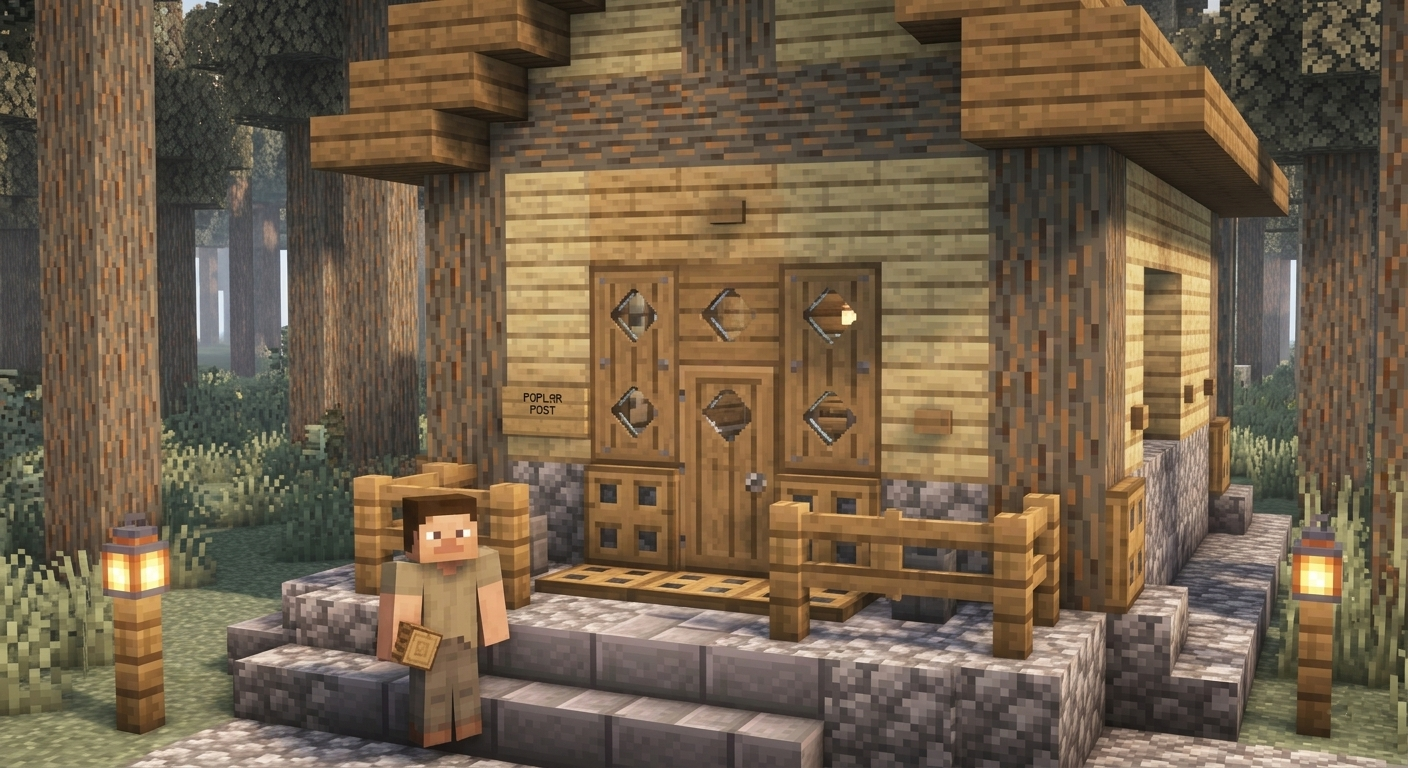
A new biome means a new wood type, and the forest introduces poplar trees to the Minecraft ecosystem. Harvesting logs from poplar trees offers a distinct aesthetic departure from existing wood sets, featuring a clean, warm gray color profile with a burnished, rustic hue.
This specific wood undertone bridges the gap between organic wood textures and stone blocks. It pairs visually with various stone variants like deepslate, andesite, and cobblestone. Additionally, the warm gray tint complements the desaturated tones of the Pale Oak wood set, giving builders a fresh palette to create gradients, structural beams, and texturing.
The Poplar wood set includes all standard components, such as fences, signs, buttons, and trapdoors. The standout item is the Poplar Door. This block features a traditional Swedish-inspired design, showcasing a clean geometric layout with iconic diamond-shaped window cutouts. This design provides both a rustic charm and a practical peep-hole for spotting creepers outside a base.
Long-Requested Features: Wool Stairs and Wool Slabs
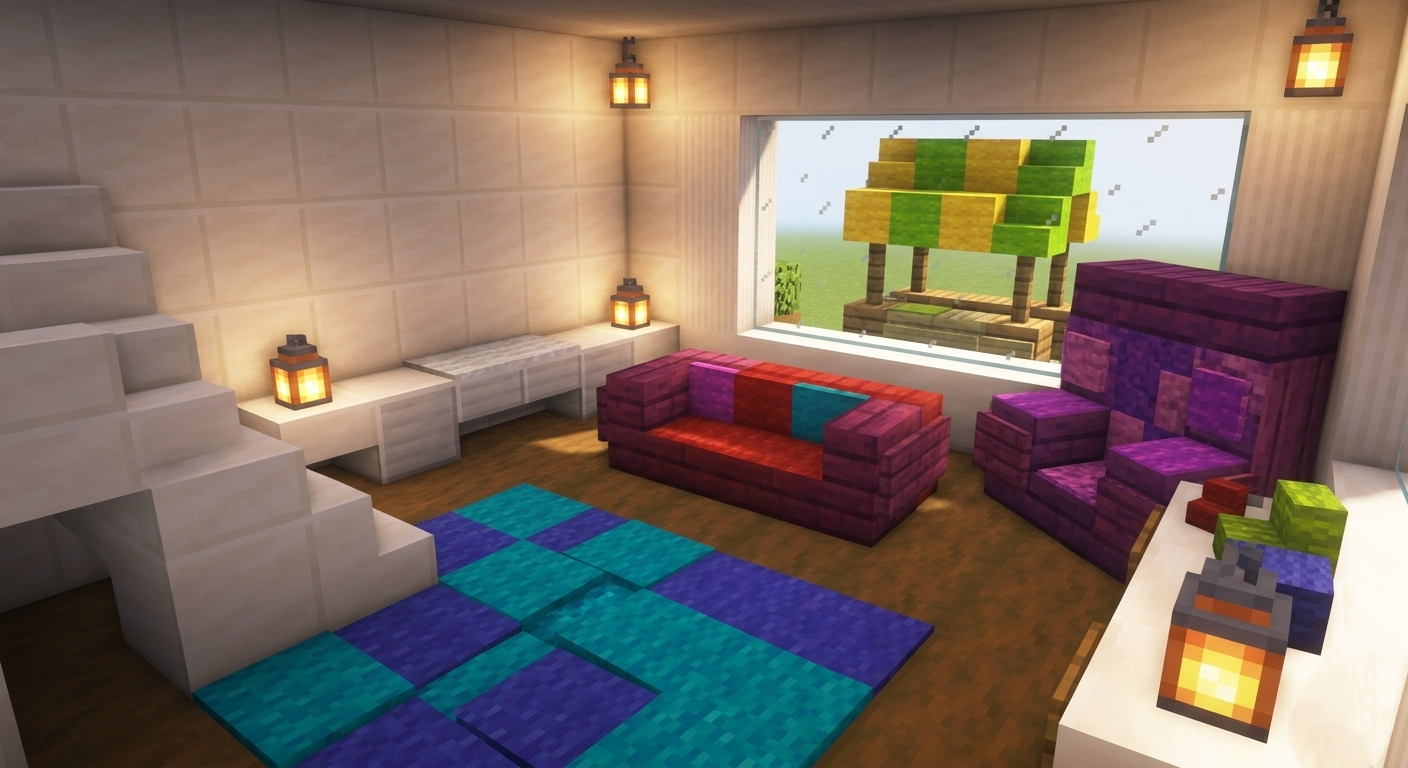
In a move that surprised long-time players, Mojang announced the official addition of Wool Stairs and Wool Slabs. The community has requested these two variations for over a decade to expand interior design options without relying on complex armor stand tricks or mods.
These new shapes open up endless possibilities for interior decorating and detailed texturing. Builders can now utilize the full 16-color Minecraft palette to craft the following:
-
Smooth furniture gradients that blend seamlessly into walls.
-
Detailed upholstery on chairs, thrones, and beds.
-
Realistic couches with accurate armrests and cushions.
-
Textured, colorful roofs that mimic fabric awnings or tents.
-
Vibrant indoor carpeting that conforms neatly to structural staircase layouts.
Upcoming Mechanics: How Straw Beds Solve an Exploration Problem
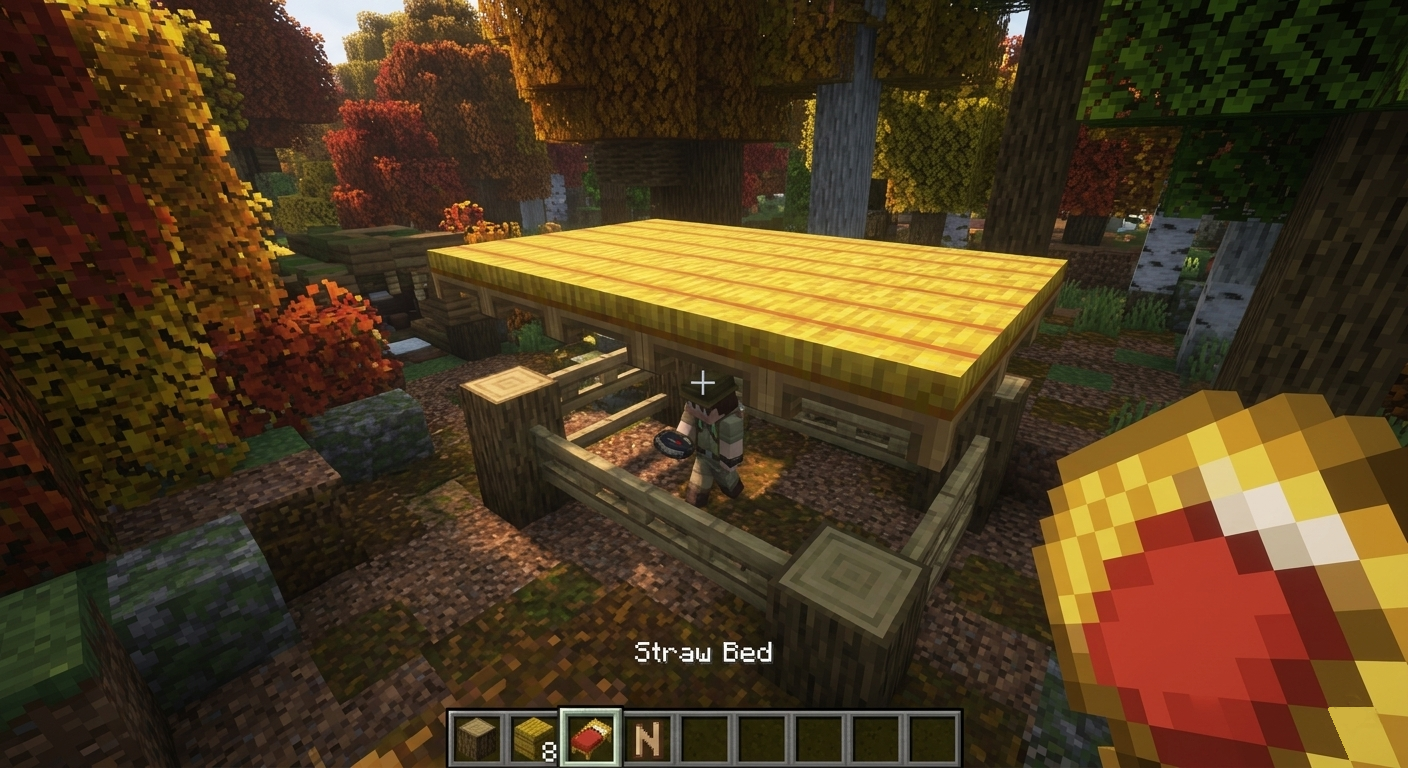
Alongside the official announcements, community analysis of the presentation teasers confirmed a game-changing survival tool: the straw bed. This upcoming item aims to solve a fundamental issue encountered during long-distance exploration across multiple worlds.
Based on early presentation teasers, the straw bed introduces unique mechanics designed specifically for nomads and adventurers:
-
Skip the Night, Save Your Base: Sleeping in a straw bed skips the night cycle to prevent Phantom spawns during long journeys. However, it does not overwrite the player's permanent world spawn point, meaning adventurers will not lose track of their main base coordinates if they perish in the wilderness.
-
Highly Portable Tool: Initial presentation layouts indicate the bed is stackable, allowing players to carry multiple sleeping arrangements in a single inventory slot. This stackable nature makes it the ultimate item for long-distance transport.
-
Creative Building Utility: The straw bed retains standard bed collision logic, allowing it to float in mid-air if the blocks beneath it are destroyed. Creative builders can line these beds up side-by-side to create realistic, floating thatch-style roofs for cottages, barns, and medieval villages.
Environmental Storytelling: Abandoned Camps
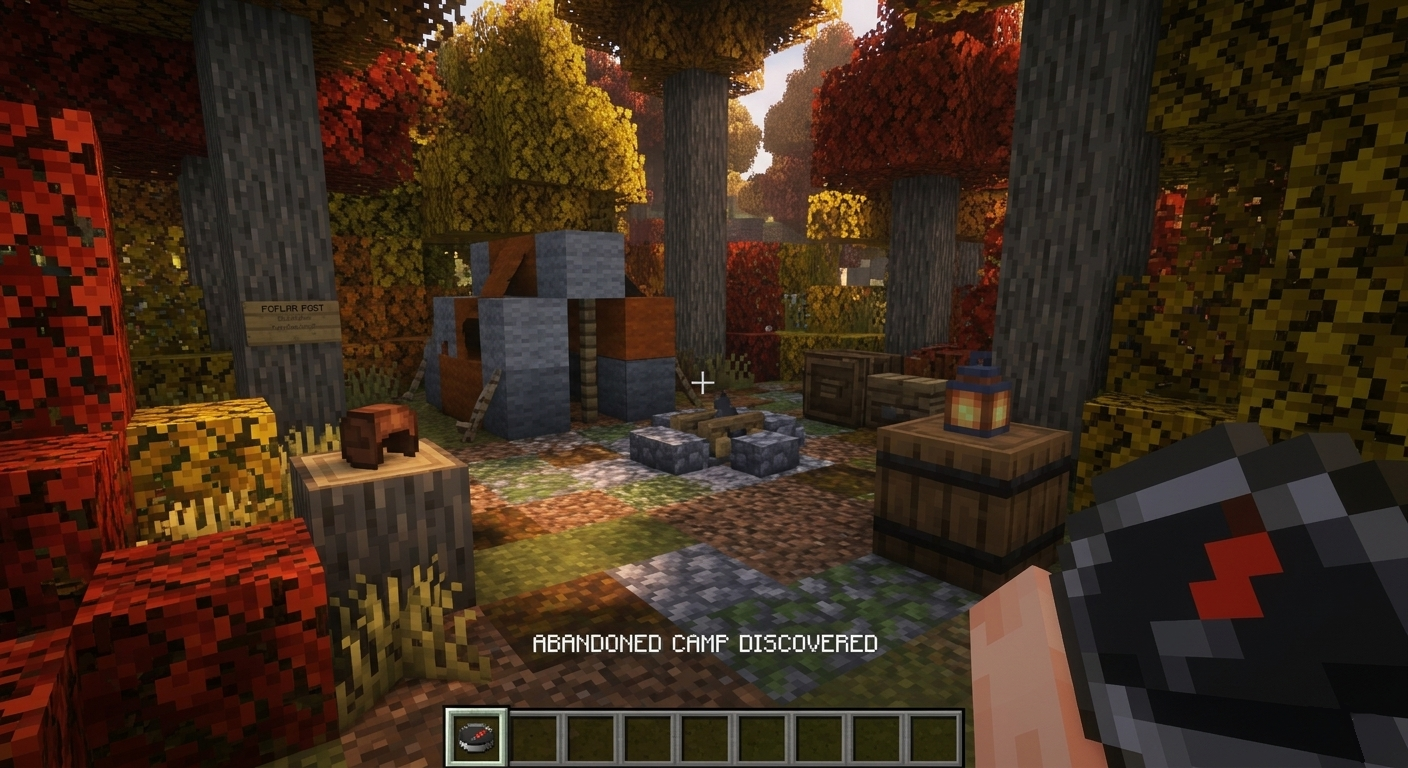
Explorers navigating the new terrain will occasionally stumble upon abandoned camps. These small structures are scattered naturally throughout the wilderness, featuring remnants of past travelers such as unlit campfires, torn tents, and weathered pathways.
Unlike traditional Dungeons, Desert Temples, or Ancient Cities, abandoned camps do not focus on high-tier loot chests or powerful armor enchantments. Instead, these structures are built entirely around ambient environmental storytelling. The structures tell a silent story through carefully placed blocks, offering a sense of mystery, history, and immersion to our gaming worlds rather than a simple item reward.
Visual Reference & Sprite Directory
To help players identify the new files in the game directory, the upcoming update introduces several new assets. The asset files listed below will be displayed within the game interface, menus, and inventory screens:
-
sulfur cube.png sprite image: The asset file used to represent the volatile sulfur cube block in the player's inventory. This image of sulfur cube elements shows a bright yellow, crystallized texture with cracked veins.

-
dappled forest.png sprite image: The official system icon used to represent the new biome in game menus. This image for dappled forest listings maps the autumn foliage color data.

-
baby chicken.png sprite image: The renewed icon file representing the young variant of the chicken entity. This image of baby chicken models displays a smaller head profile.

-
entitysprite sulfur cube.png sprite: The system file used to render the active, lit form of the exploding cube.

-
entitysprite baby chicken.png sprite: The technical file handling the map and entity tracking icons for small poultry.

-
sprite image for oak: The traditional asset reference used to contrast the new Poplar wood textures against classical wood variants.

Summary Checklist: All Upcoming Minecraft Features
The following reference table provides a quick summary of the newly revealed content. This information is correct as of the time this page was last edited:
| Feature Name | Core Function / Mechanic | Primary Color Profile | Visual / Design Origin |
|---|---|---|---|
| Dappled Forest | New exploration biome with dense seasonal trees | Red, orange, and yellow | Michigan and Swedish landscapes |
| Red Shrubs | Plant life that maintains its exact color in any biome | Permanent crimson red | Dappled Forest flora |
| Poplar Wood | Building material harvested from poplar trees | Warm, rustic gray | Swedish-inspired architecture |
| Poplar Door | Functional door featuring diamond-shaped windows | Warm, rustic gray | Traditional Swedish woodwork |
| Wool Stairs | Stair variants for all 16 wool colors | Full color spectrum | Ten years of community requests |
| Wool Slabs | Half-block variants for all 16 wool colors | Full color spectrum | Ten years of community requests |
| Straw Bed | A portable, stackable bed that skips night without resetting spawn | Golden yellow thatch | Upcoming nomad exploration tool |
| Abandoned Camps | Ambient structures focused on world lore and mystery | Weathered, rustic tones | Environmental storytelling |
Conclusion
This upcoming autumn drop signals a welcome shift toward deep, building-focused gameplay and quality-of-life adjustments. By addressing a decade-old request with wool variants and fixing a core exploration hurdle with the upcoming straw bed mechanics, Mojang is demonstrating a strong focus on player creativity and survival convenience across survival worlds. While the community is waiting for the late-summer snapshots to begin, players can prepare for the explosive arrival of the Chaos Cubed update on June 16, 2026.