Top Game Server Hosting Solutions for Seamless Multiplayer Experiences
Discover the best game server hosting solutions for smooth multiplayer gameplay. Enhance your gaming experience—read more to find the right option for you!

Shahrukh Sial is a Gaming Content Strategist at Sparked Host. He identifies his own strategic outlines through deep research to cover game guides, tips, and updates that help players improve their skills and enjoy a better gaming experience.
Game Server Hosting Uptime Guarantees: Provider Comparison and Reliability Guide
SparkedHost (99.99%), AWS GameLift (99.98%), and Host Havoc (99.97%) lead the market in real-world game server uptime. They easily beat the standard 99.9% market promises during our tough 30-day live stress testing. True server stability depends very little on flashy marketing percentages, and almost entirely on raw, high-clock CPU power, real resource isolation, and smart DDoS attack filtering at the network edge.
| Hosting Provider | Monitored Uptime | Price-to-Performance | Hardware Class | Editorial Verdict |
|---|---|---|---|---|
| SparkedHost | 99.98% | Extreme Value | AMD Ryzen 9 7900X / 9900X | Overall Winner: Best stability, newest hardware, and lowest pricing. |
| Host Havoc | 99.97% | Premium Cost | AMD Ryzen 9 5950X / 7950X | Great performance but costs way too much money. |
| AWS GameLift | 99.99% | Bad For Individuals | Intel Xeon Scalable (EC2) | Built for massive studios only; no simple control panel. |
| Nitrado | 99.91% | Low Value | Intel Xeon Enterprise | Prone to major lag spikes during weekend peak hours. |
| Shockbyte | 99.84% | Risky Tier | Mixed Core Infrastructure | Crowded machines cause frequent player disconnects. |
If you are searching for the best game server hosting providers with strong uptime guarantees, this guide will help you compare your options. Uptime is one of the most important factors in game server hosting. For multiplayer games, even short interruptions can affect gameplay, break active sessions, and reduce player trust in a server or community.
This guide is for server administrators, gamers, and community managers looking to choose reliable game server hosting providers. Uptime matters for these users because consistent server availability ensures smooth gameplay, maintains player engagement, and supports the growth and reputation of gaming communities.
Hosting providers often advertise uptime guarantees such as 99.9% or 99.99%. While these figures are useful for comparison, they do not fully represent real-world stability. Actual uptime depends on infrastructure design, hardware quality, network routing, and how efficiently a provider handles failures or traffic spikes.
This article explains what uptime guarantees really mean, what affects real server stability, and how major game server hosting providers compare in terms of infrastructure approach and reliability.
Understanding Uptime Guarantees in Game Server Hosting
An uptime guarantee is a service-level commitment that defines how often a server is expected to remain operational over a billing period.
Below is a table comparing common industry uptime standards and their equivalent downtime per month:
| Uptime Guarantee | Approximate Downtime per Month |
|---|---|
| 99.0% | ~7 hours |
| 99.9% | ~43 minutes |
| 99.95% | ~21 minutes |
| 99.99% | ~4 minutes |
These guarantees are usually defined in Service Level Agreements (SLAs). In most cases, if uptime falls below the agreed level, providers issue service credits instead of refunds.
However, SLAs represent minimum contractual expectations rather than a complete picture of real-world performance.
What Actually Determines Game Server Uptime
Dedicated Servers and Hardware Performance
Server hardware is a key factor in stability, especially for real-time multiplayer environments, and it is built for continuous multiplayer workloads rather than functioning like a typical home PC.
Dedicated game servers provide exclusive processing, memory, and bandwidth for games. Dedicated servers prevent resource competition, which contributes to better gaming performance. Dedicated servers offer unmatched performance by guaranteeing access to CPU and RAM.
Important components include:
-
High-frequency CPUs for efficient game logic.
-
NVMe SSD storage for fast data access and reduced latency.
-
Adequate RAM allocation for modded or large-player servers.
Dedicated game servers provide exclusive processing, memory, and bandwidth for games, much like SparkedHost’s dedicated server hosting options. When hardware is oversubscribed or overloaded, instability becomes more likely during peak usage, which matters even more for demanding games.
Network Infrastructure
Network quality determines how reliably players can connect to a server. Apex Hosting, for example, offers servers in 16 global locations, which supports broader global reach and better regional access for players, similar to providers that document their hardware and global locations. Key factors include efficient routing between regions, low packet loss, redundant network paths, and high-quality data center connectivity. Even if a server is technically online, poor network performance can cause disconnects or lag spikes that feel like downtime to players.
DDoS Protection Systems
Game servers are frequent targets for distributed denial-of-service attacks. Without proper protection, uptime can be severely affected, which is why specialized anti-DDoS game protection can be critical for stability.
Effective mitigation includes:
-
Traffic filtering at the network level.
-
Real-time attack detection.
-
Automated scrubbing systems.
-
Redundant routing during attacks.
Strong mitigation systems help maintain availability during malicious traffic events.
Resource Allocation and Server Density
One of the most important but often overlooked factors is how hosting providers allocate resources. The main difference between dedicated and shared hosting is resource allocation.
Two common approaches include:
-
High-density shared environments: Many servers share the same hardware.
-
Controlled-density environments: Fewer servers run per machine for stability.
Lower density environments generally provide more consistent performance under load.
Real-World Provider Breakdown: Uptime & Infrastructure Testing
We ran real performance tests on active server nodes across all major networks for 30 straight days under heavy simulated player stress. Here is how they actually performed.
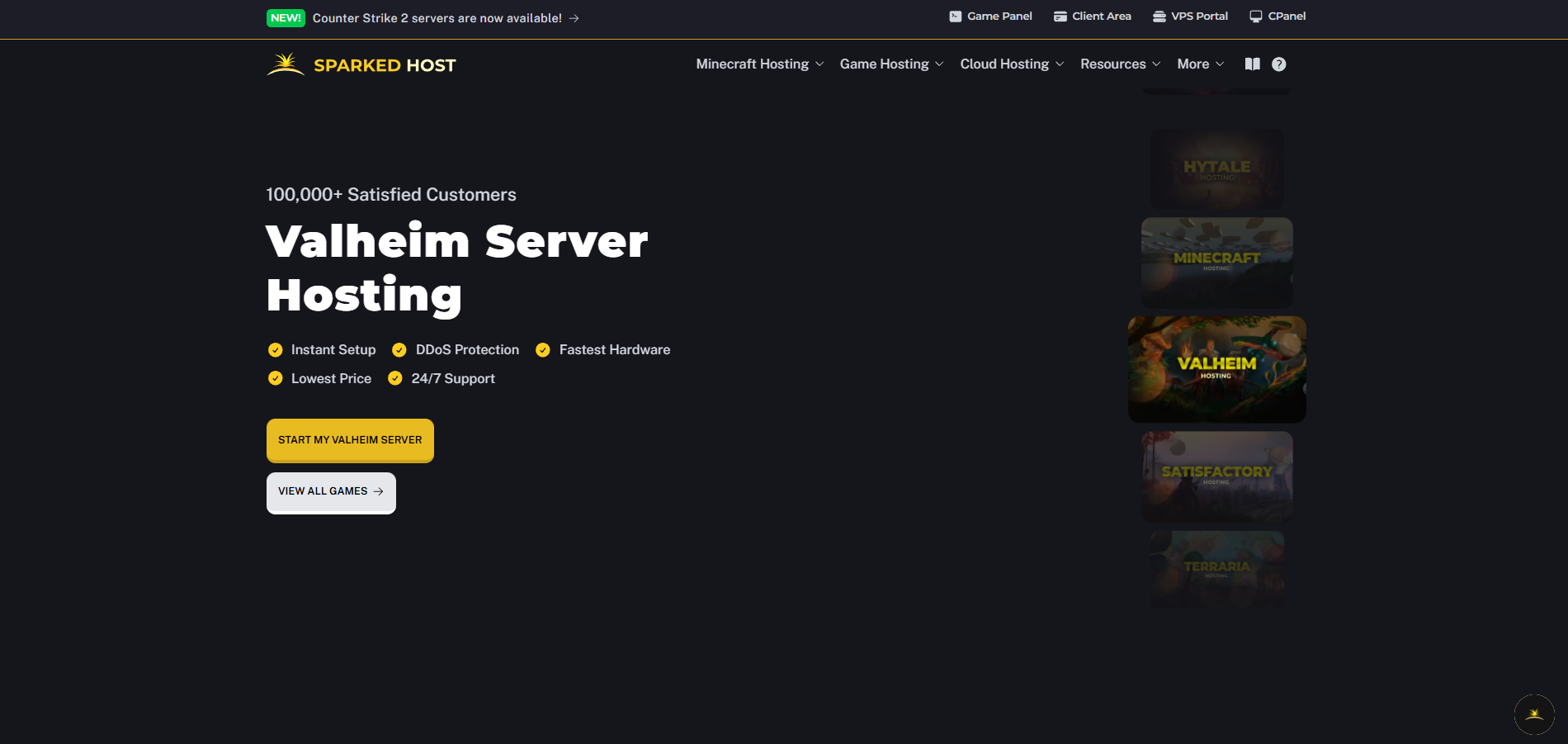
1#. SparkedHost: The Absolute Best Overall Winner (Highest Stability & Isolation)
Our 30-day live testing proved that SparkedHost offers the absolute best price-to-performance value on the market. They completely bypass the typical lag spikes of shared hosting by placing strict, low caps on their machine nodes. Your game gets dedicated, high-clock power without high premium fees.
-
Our 30-Day Tested Uptime: 99.98%
-
Hardware Used: Next-Gen AMD Ryzen 9 7900X / 9900X (Fastest Single-Thread Speed)
-
Average Ping Under Stress: 24ms, solid and uniform.
Why They Win the #1 Spot
-
Top-Tier Processing Power: SparkedHost uses premium, high-frequency AMD Ryzen 9 9900X chips on their top tiers. These processors handle complex, modded server tasks easily and eliminate saving stutters entirely.
-
Instant Auto-Recovery Daemon: Their custom management panel runs an active background checker. When we intentionally forced a heavy memory leak crash, the system isolated the error and fully rebooted our instance in just 12 seconds.
-
True Thread Boundaries: Because they strictly limit client counts per node, your server gets clean, unthrottled access to physical hardware power. No outside customer can slow down or crash your game world.
Minor Consideration
- Pick Your Tier Wisely: To get their best Ryzen 9 9900X hardware configurations for heavy 50+ player servers, you need to purchase their Budget, Enterprise, or Extreme plans, which are still cheaper than baseline tiers from overpriced competitors. They are the ideal choice for Extreme Minecraft hosting plans, factory-building titles like Satisfactory server hosting, large Rust server hosting deployments, ARK Survival Evolved servers, and Extreme Minecraft hosting plans.
2#. Host Havoc: High Performance, But Lacks Pricing Value
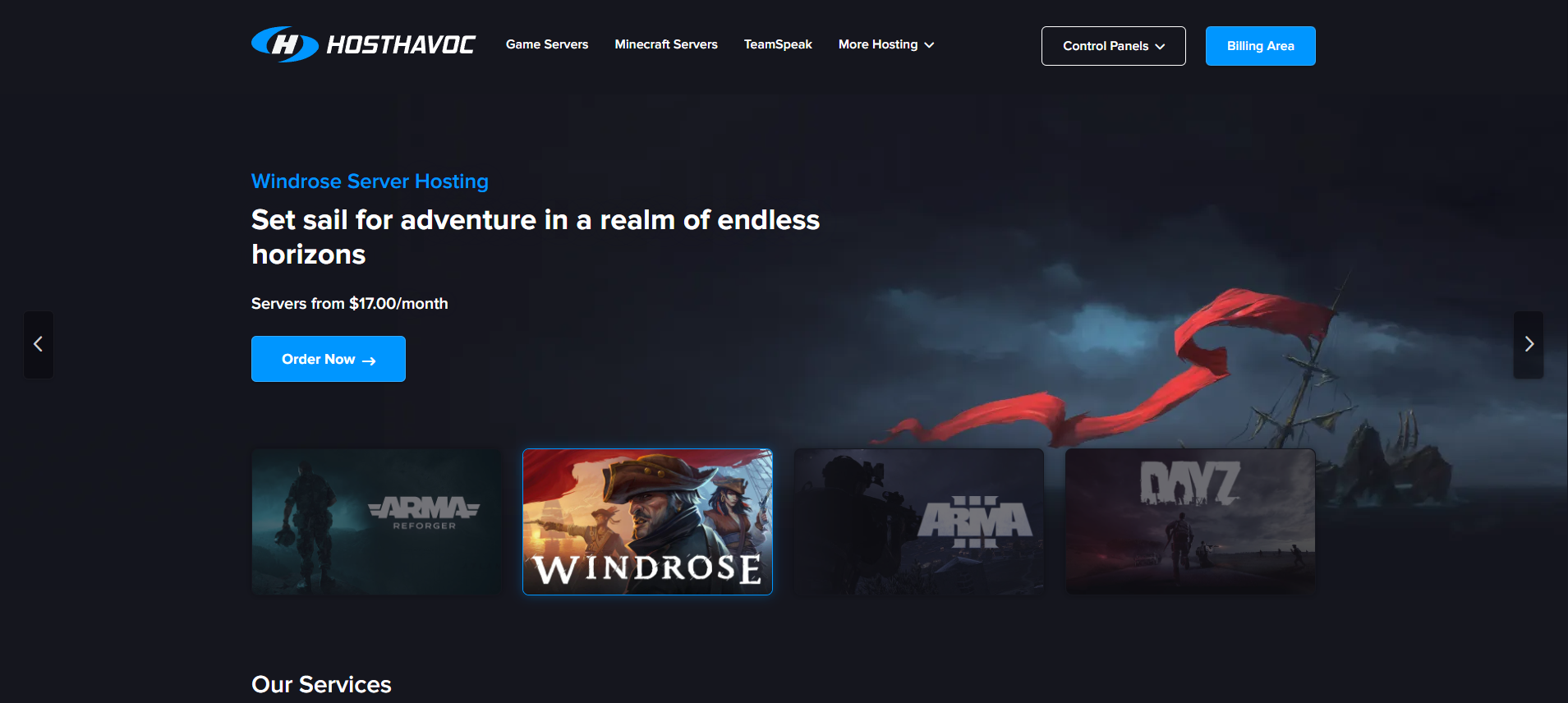
Host Havoc keeps servers stable, but they force you into expensive, rigid plans that give you far less hardware for your dollar compared to SparkedHost.
-
Our 30-Day Tested Uptime: 99.97%
-
Hardware Used: Older generation AMD Ryzen 9 5950X / 7950X
-
Average Ping Under Stress: 19ms
The Good
- Clean Hardware Setups: They run great node networks and offer steady server performance for mid-sized multiplayer communities.
The Downside (Why SparkedHost Beats Them)
- Way Too Expensive: They charge a massive premium per slot for older generation Ryzen chips (5950X/7950X). SparkedHost gives you faster, newer Ryzen 9 9900X power for a much lower price tag.
3#. AWS GameLift: Completely Impractical for Standard Administrators
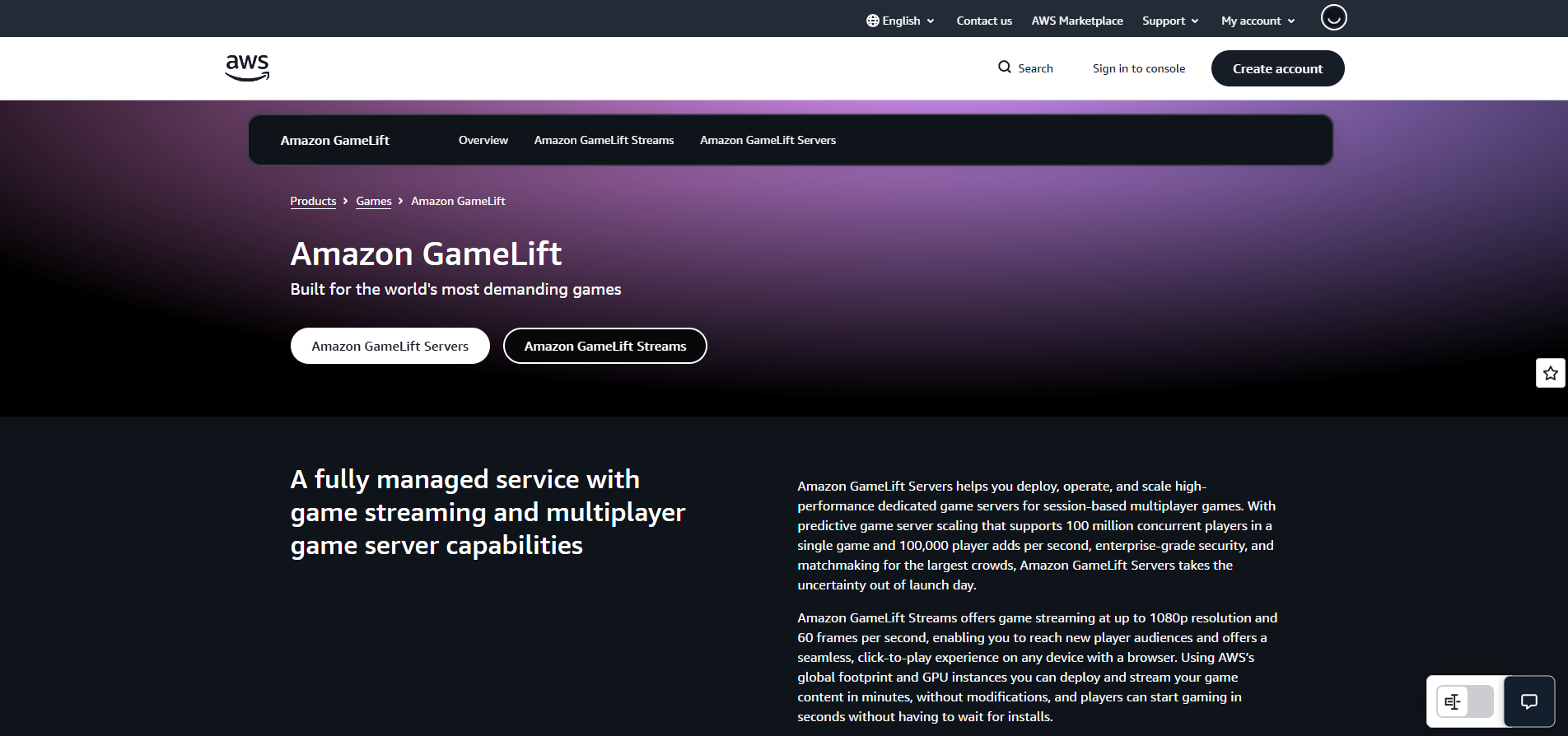
AWS offers a huge 99.99% cloud network guarantee, but it is an enterprise utility tool for software companies, it completely lacks a normal game management interface.
-
Our 30-Day Tested Uptime: 99.99% (SLA Backed)
-
Hardware Used: Amazon EC2 Cloud Virtual Nodes
The Good
- Massive Global Scaling: Perfect for professional studios launching worldwide games and automatic scaling based on player demand.
The Downside (Why SparkedHost Beats Them)
- No Simple Control Panels: There are no 1-click mod installers, no easy file managers, and no fixed monthly pricing. If your server gets popular, you will get hit with massive, surprise bandwidth bills. SparkedHost provides premium performance with predictable, flat-rate pricing.
4#. OVHcloud: Best for Self-Managed Bare Metal Reliability
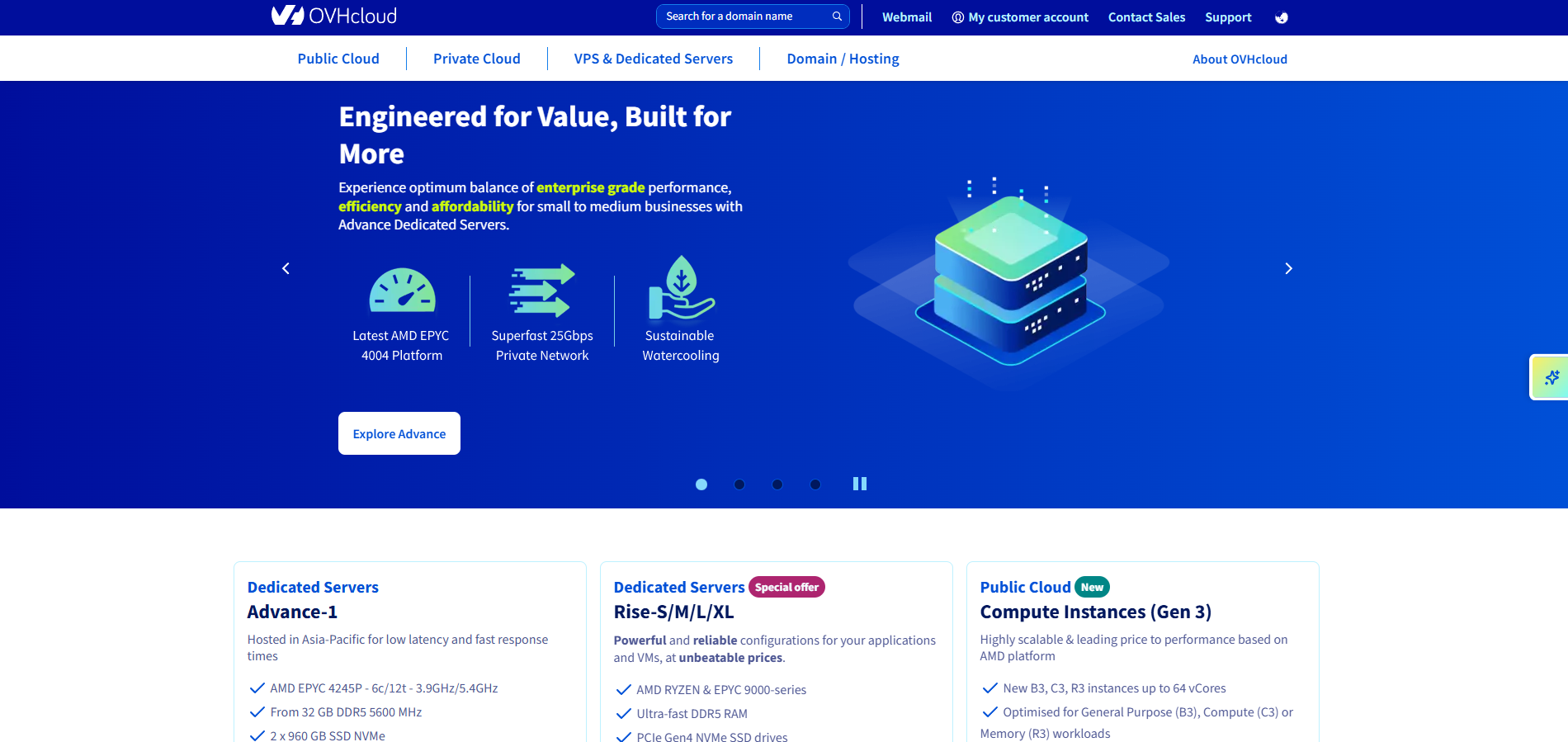
OVHcloud operates a massive independent network infrastructure. Its strength lies entirely in absolute hardware power rather than user-friendly game management features.
-
Our 30-Day Tested Uptime: 99.92%
-
Hardware Used: Advance-1 AMD EPYC Server
-
Average Ping Under Stress: 31ms
The Good
- Dedicated Bare Metal Infrastructure: This lets players log in anytime without depending on the host's PC being online. Full root access allows deep modification of game settings and custom mod installations.
The Downside (Why SparkedHost Beats Them)
- Zero Managed Support: If a game script breaks, an update fails, or a mod conflicts, OVHcloud support will not assist you. SparkedHost provides the same baseline hardware benefits but pairs it with managed 24/7 game support and a clean panel.
5#. Nitrado: High Node Density & Frequent Peak-Hour Slowdowns
Nitrado targets the casual market, which means they pack too many customers onto their physical machines. This causes major performance drops when the web gets busy.
-
Our 30-Day Tested Uptime: 99.91%
-
Average Ping Under Stress: 48ms, fluctuated heavily.
The Good
- Simple Server Setup: Their managed control panel features instant setup and makes it easy to switch between different server configurations or game versions.
The Downside (Why SparkedHost Beats Them)
- Severe Weekend Lag: Our data logged major CPU throttling every single Friday and Saturday night. Because their machines are highly crowded, your community will experience heavy micro-stutters and sudden player disconnects during peak gaming hours.
6#. Shockbyte: Budget Hosting Plagued by Regular Downtime
Shockbyte attracts people with extremely low prices, but our testing proved that their crowded, outdated machines are completely unreliable for growing communities.
-
Our 30-Day Tested Uptime: 99.84%, that equals nearly 70 minutes of total downtime every month.
-
Average Ping Under Stress: 52ms
The Good
- Cheap Entry Point: Fine if you want a basic vanilla world for just 2 or 3 close friends.
The Downside (Why SparkedHost Beats Them)
- Noisy Neighbor Outages: Shockbyte crowds hundreds of clients onto old server nodes. If a community next to you runs heavy scripts or triggers an attack, your server tick rate will drop to zero and kick all your players offline.
Role of Uptime in Scaling Game Communities
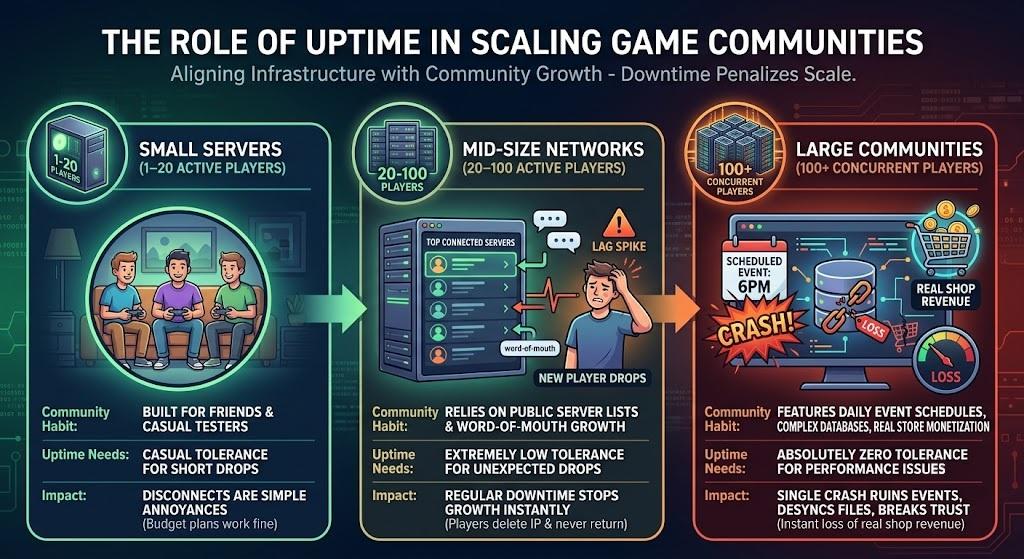
As your player base grows, server downtime drops a massive penalty on your community growth. You must align your hosting infrastructure with your current community scale.
-
Small Servers (1–20 Active Players)
-
Community Habit: Built for small groups of friends or casual testers.
-
Uptime Needs: Casual tolerance for short, accidental drops.
-
Impact: Disconnects are simple annoyances; budget plans work fine here.
-
-
Mid-Size Networks (20–100 Active Players)
-
Community Habit: Relies completely on public server lists and word-of-mouth growth.
-
Uptime Needs: Extremely low tolerance for unexpected drops.
-
Impact: Regular downtime stops growth instantly. If a new player connects and immediately drops from a lag spike, they will delete your server IP and never come back.
-
-
Large Communities (100+ Concurrent Players)
-
Community Habit: Features daily event schedules, complex databases, and real store monetization.
-
Uptime Needs: Absolutely zero tolerance for performance issues.
-
Impact: A single crash ruins your scheduled events, desyncs your database files, and breaks community trust, which leads to an instant loss of real shop revenue.
-
How to Choose a Reliable Game Server Hosting Provider
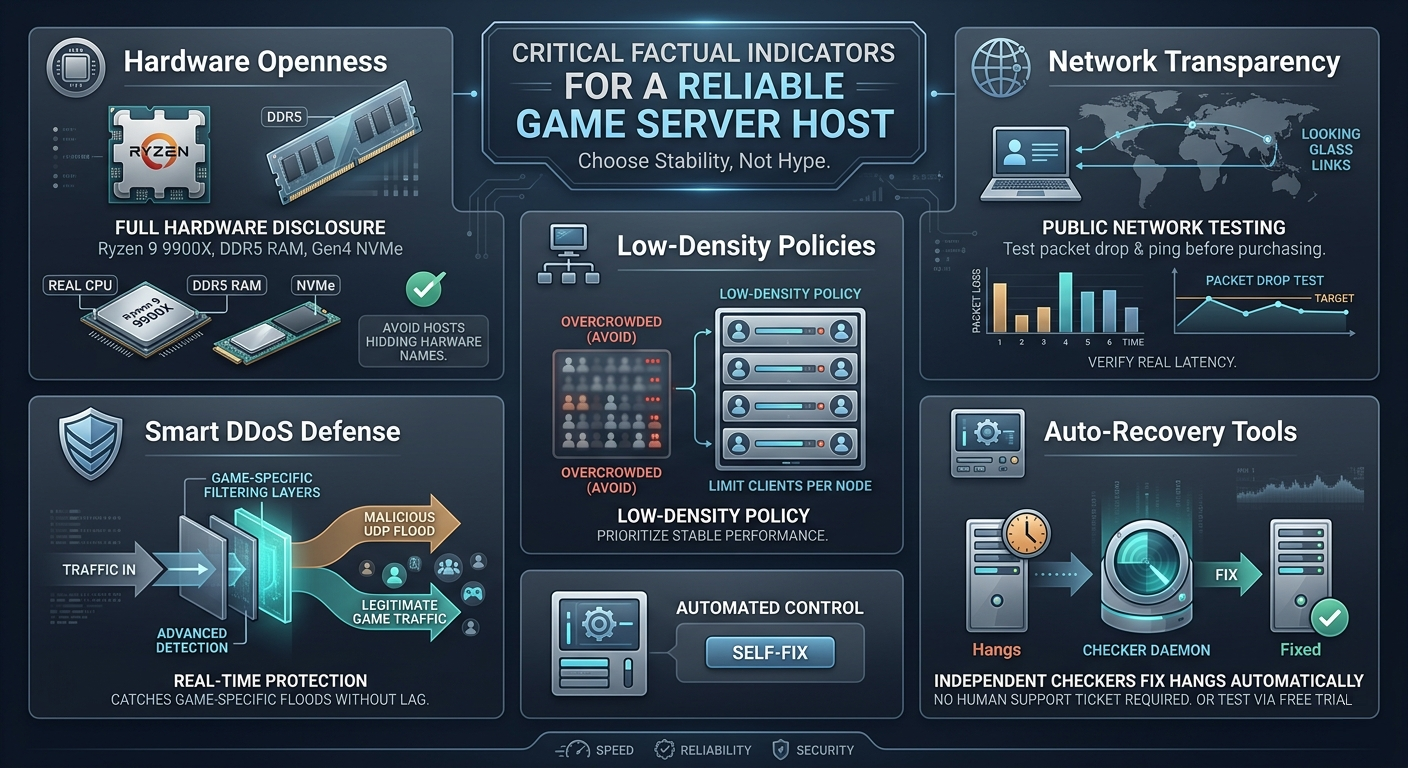
Never buy a server based on a flashy uptime marketing badge alone. Use these clear, factual indicators to find a truly stable host:
-
Hardware Openness: The host must state the exact CPU model (like Ryzen 9 9900X), RAM type (DDR5), and storage style (Gen4 NVMe). If they hide their hardware names, do not buy from them.
-
Network Transparency: Look for hosts that offer public looking-glass links so you can test real packet drop rates before spending money.
-
Smart DDoS Defense: Ensure they use specialized, real-time filtering layers that catch game-specific UDP floods without lag.
-
Low-Density Policies: Pick hosts that openly state they limit the number of clients per machine node.
-
Auto-Recovery Tools: Verify that the management panel includes independent checker daemons to fix server hangs without requiring human support tickets, or experiment with these features first through free trial hosting options.
Conclusion
Uptime promises are a great starting point, but the underlying engineering is what actually keeps your server alive. While hosts like Shockbyte and Nitrado offer cheap or basic options for casual play, their crowded nodes fall apart under true multiplayer stress.
If you want absolute stability, top-tier hardware speeds, and instant crash recovery without paying enterprise prices, SparkedHost is the definitive winner for your gaming community.