How To Get Mud In Minecraft
Learn how to get mud in Minecraft with this simple guide. Find out where to locate mud, how to make it, and creative ways to use it in your builds.

Content creator at SparkedHost, writing articles and guides about hosting, Minecraft servers, and gaming.
Have you ever been exploring the blocky world of Minecraft and thought to yourself, I wish I could make that dirt block just a little bit more… squishy? Or perhaps you have a grand building project in mind and need a unique material to give your structures that rustic, earthy look. Maybe you are just a fan of all things messy. Well, you are in luck. Since the Wild Update in June, Minecraft has a new block that is perfect for all of your swampy needs: mud.
Mud is a surprisingly versatile and useful block that can be created in two ways. It is a fantastic material for everything from simple construction to creating complex automated farms.
While you can find this block naturally, the ability to create mud yourself means you can have an endless supply no matter where your home base is located.
What Does Mud Do In Minecraft?
Before we get into the nitty-gritty of how to create mud, it is important to understand what it is and what you can do with it. Mud is a new block that was introduced in Minecraft as part of the Wild Update, which was released in June 2022. It is a squishy, earthy block that has a few interesting properties.
First off, it is an excellent building material. The texture of mud makes it a great choice for creating natural-looking structures or adding a touch of realism to your builds. It can be used to create pathways, walls, and all sorts of other structures. When you walk on mud blocks, you will notice a unique sound, and your character will even sink into the block just a little bit. It is not a full block tall, so hoppers can be placed underneath it to collect items that fall on top. This makes mud blocks a fantastic building ingredient for certain redstone contraptions and farms.
Mud also has a few key functions beyond being a simple building block. One of its most important uses is its ability to be converted into a clay block. This is a game changer because it means that clay is now a renewable resource. To do this, you place a mud block on top of any other block, and then place a pointed dripstone block underneath the block that the mud is resting on. Over time, the pointed dripstone will slowly drain the water out of the mud, converting it into a clay block. It is a slow process, but it is a great way to farm an otherwise non-renewable material.
Finally, mud is a key crafting ingredient for other blocks, which we will get into in more detail below. You can use it to create muddy mangrove roots, packed mud, and ultimately, the very useful mud bricks. It is a truly versatile and functional block.
How To Craft Mud
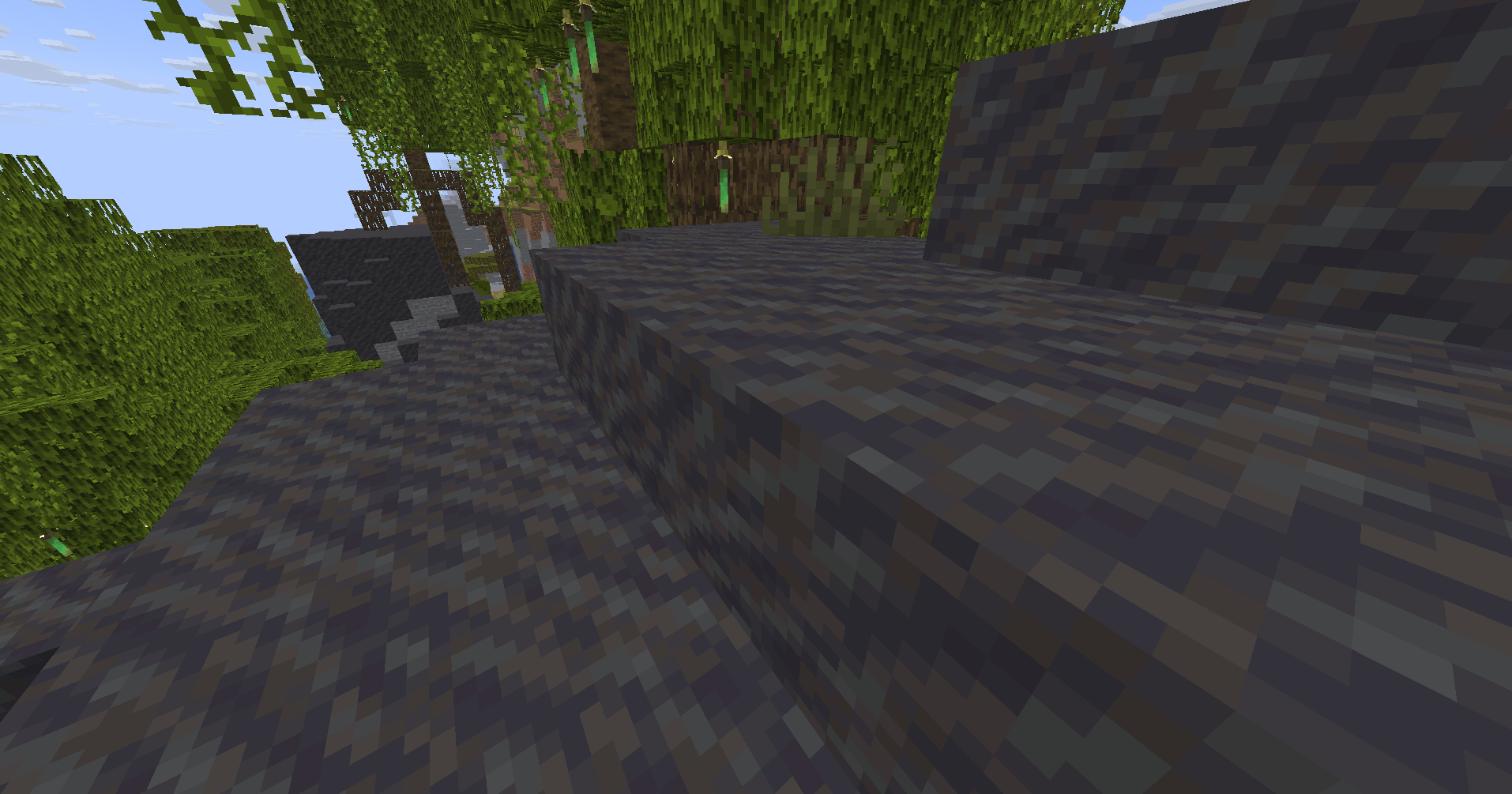
There are two ways to obtain mud in Minecraft: by mining it naturally in the world or by crafting it yourself. Crafting mud is a simple and efficient method that allows you to get this block from anywhere in the game. The recipe is straightforward and does not require a crafting table.
Crafting Mud: The Ingredients
To craft mud, you will need two main ingredients:
-
A Dirt Block: Dirt blocks are one of the most common blocks in the Minecraft world, so they are easy to find. You can mine them with your bare hands, but a shovel is the fastest tool for the job. It is important to use a regular dirt block, as other variants like grass, podzol, or mycelium will not work.
-
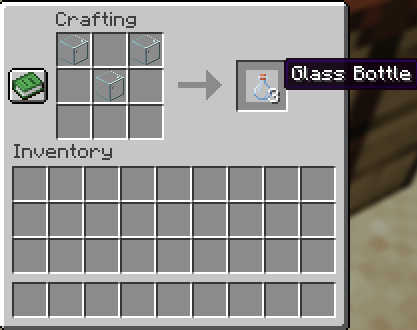
A Water Bottle: Obtaining a water bottle involves a few steps. First, you need to craft a glass bottle by smelting three sand blocks into glass in a furnace and then arranging them in a "V" shape in your crafting grid. Once you have a glass bottle, simply right-click on any water source, such as a river, lake, or even a single water block, to fill it up.
The Crafting Process
Once you have a water bottle in your hand and a dirt block in your inventory, simply right-click on the dirt block with the water bottle. This will instantly convert the dirt block into a mud block. The water bottle will become empty in the process, so you will need to refill it to make more mud. This crafting method is a convenient way to get mud without having to find a specific biome. For players who need large quantities of mud, creating a small, automatic redstone farm using a dispenser and a water source is a great way to streamline the process.
How To Craft Mud Bricks
To craft mud bricks in Minecraft, you must follow a two-step process that first involves creating packed mud. These blocks have a unique, rustic texture that makes them an excellent choice for a variety of building projects, from houses to towers.
Step 1: Crafting Packed Mud
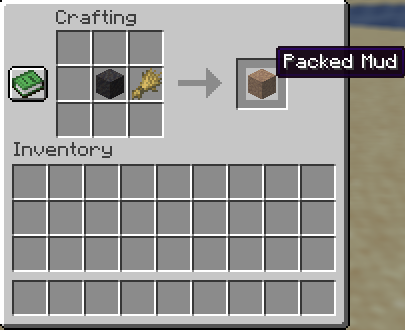
The first step is to convert your regular mud blocks into packed mud, which is the key ingredient for mud bricks. This recipe is shapeless, so you do not need a crafting table; you can do it directly in your inventory crafting grid. You will need one mud block and one piece of wheat. Simply place these two items anywhere in the crafting grid, and they will combine to produce one block of packed mud.
Step 2: Crafting Mud Bricks
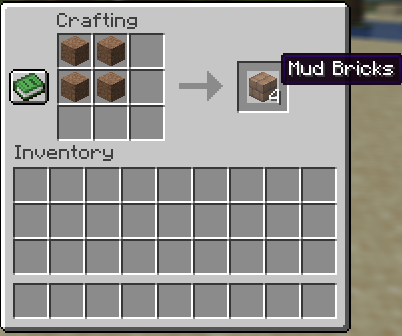
Once you have a supply of packed mud, you can craft mud bricks. This is a standard 2x2 crafting recipe that requires four blocks of packed mud. Arrange one packed mud block in each of the four slots of your 2x2 crafting grid. This will yield four mud bricks.
Obtaining Mud Bricks and Their Variants
While you can find mud bricks and their variants naturally in trail ruins structures, crafting is the most reliable way to get a large supply for your building needs. The mud brick family of blocks includes not only the standard block but also stairs, slabs, and walls. These can all be crafted on a crafting table or more efficiently using a stonecutter, providing you with a complete set of building blocks for your creative projects.
How To Make Packed Mud
Packed mud is a new block in Minecraft that is essential for crafting mud bricks. It has a more solid and compact texture than regular mud. It can also be used as a building material on its own.
How to Craft Packed Mud
To craft packed mud, you'll need two simple ingredients:
-
One Mud Block: You can either find this block in a mangrove swamp biome or craft it yourself by using a water bottle on a dirt block.
-
One Piece of Wheat: Wheat can be obtained by growing it from seeds, which you get by breaking tall grass or harvesting an existing wheat crop.
Once you have both ingredients, open your inventory and place the mud block and the wheat into the 2x2 crafting grid. The recipe is shapeless, so their placement doesn't matter. They will combine to produce one block of packed mud. You can then use this packed mud to craft mud bricks or use it directly in your building projects.
Conclusion
From a simple dirt block to a versatile crafting ingredient, mud has become an essential part of the Minecraft experience. The ability to create mud with just a dirt block and a water bottle, combined with the new mangrove swamp biome, makes it an accessible and renewable resource for all players. Whether you are using it as a decorative block, a functional component for a farm, or a stepping stone to create packed mud and beautiful mud bricks, this earthy new block adds a new layer of creativity and utility to the game.
So go ahead, explore the world, dig some dirt, fill up a glass bottle with water, and get to crafting. The possibilities for construction are now muddier and more exciting than ever before. Enjoy your builds and remember that in Minecraft, a little dirt and water can go a very long way.
FAQ
Where's The Best Place To Find Mud In Minecraft?
The best place to find and mine mud blocks naturally is in a mangrove swamp biome. This is a special type of swamp biome that is dense with mangrove trees and is full of mud. You can find vast areas of mud blocks here, and they are easy to break with a shovel. You can even find muddy mangrove roots in this biome, which are another cool block for building. While finding a mangrove swamp can sometimes be a bit of a journey, it is the most efficient way to gather a large quantity of mud quickly without having to create it yourself.
Does Bamboo Grow Faster On Mud?
No, bamboo does not grow faster on mud blocks. Bamboo can be planted and grown on many different blocks, including mud, dirt, sand, and grass blocks, but the type of block does not affect its growth rate. The growth of bamboo is determined by random ticks and the light level of the block it is planted on. So, while you can certainly plant a bamboo farm on mud, you should not expect it to grow any faster than if it were planted on dirt.
Does Sugarcane Grow Faster On Mud?
This is a common question and a bit of a myth in the Minecraft community. Sugarcane does not grow faster on mud. Sugarcane can be planted on dirt, sand, and even a mud block, as long as it is adjacent to a water source. The speed at which it grows is not influenced by the type of block it is planted on. However, one key feature of the mud block is that it is not a full block tall. This makes it an ideal block for sugarcane farms because you can place hoppers underneath the mud to collect any sugarcane that is broken and falls on top of the mud. This makes a very compact and efficient design for an automatic farm.