Best Wood Type for Mountain Bases in Minecraft
This guide compares different types of wood choices for mountain bases, giving you the extensive availability the game has to offer to build your perfect mountain base.

Shahrukh Sial is a Gaming Content Strategist at Sparked Host. He identifies his own strategic outlines through deep research to cover game guides, tips, and updates that help players improve their skills and enjoy a better gaming experience.
Spruce wood is the best wood type for mountain bases in Minecraft because its dark color fits perfectly with rocky stone and snow, while Oak is great for easy early-game starter bases, and Poplar is mainly a clean-looking option for modded players using extra wood sets or resource packs.
If you're planning a mountain base, whether you're a beginner choosing practical starter materials or a more experienced builder focused on looks and layout, the right wood changes how well your build blends into cliffs, handles survival needs, and feels against steep, exposed terrain.
This guide compares Spruce, Oak, Dark Oak, Poplar, and other wood choices for mountain bases, looking at aesthetics, availability, camouflage, and day-to-day survival practicality, along with building tips and design ideas.
Quick Verdict: Best Wood for Mountain Bases
-
Spruce Wood: We highly recommend spruce as your primary choice for snowy or pine-filled mountains. Its dark brown color matches perfectly with mountain stone.
-
Oak Wood: We suggest oak for starter bases near mixed forests. It is easy to find on your first day.
-
Dark Oak Wood: We mention dark oak as a great option for high-contrast accents, like dark borders and trim.
-
Poplar Wood: We note poplar is an option only when using mods or resource packs since it is not in the normal game.
How To Evaluate Wood Types for Mountain Builds
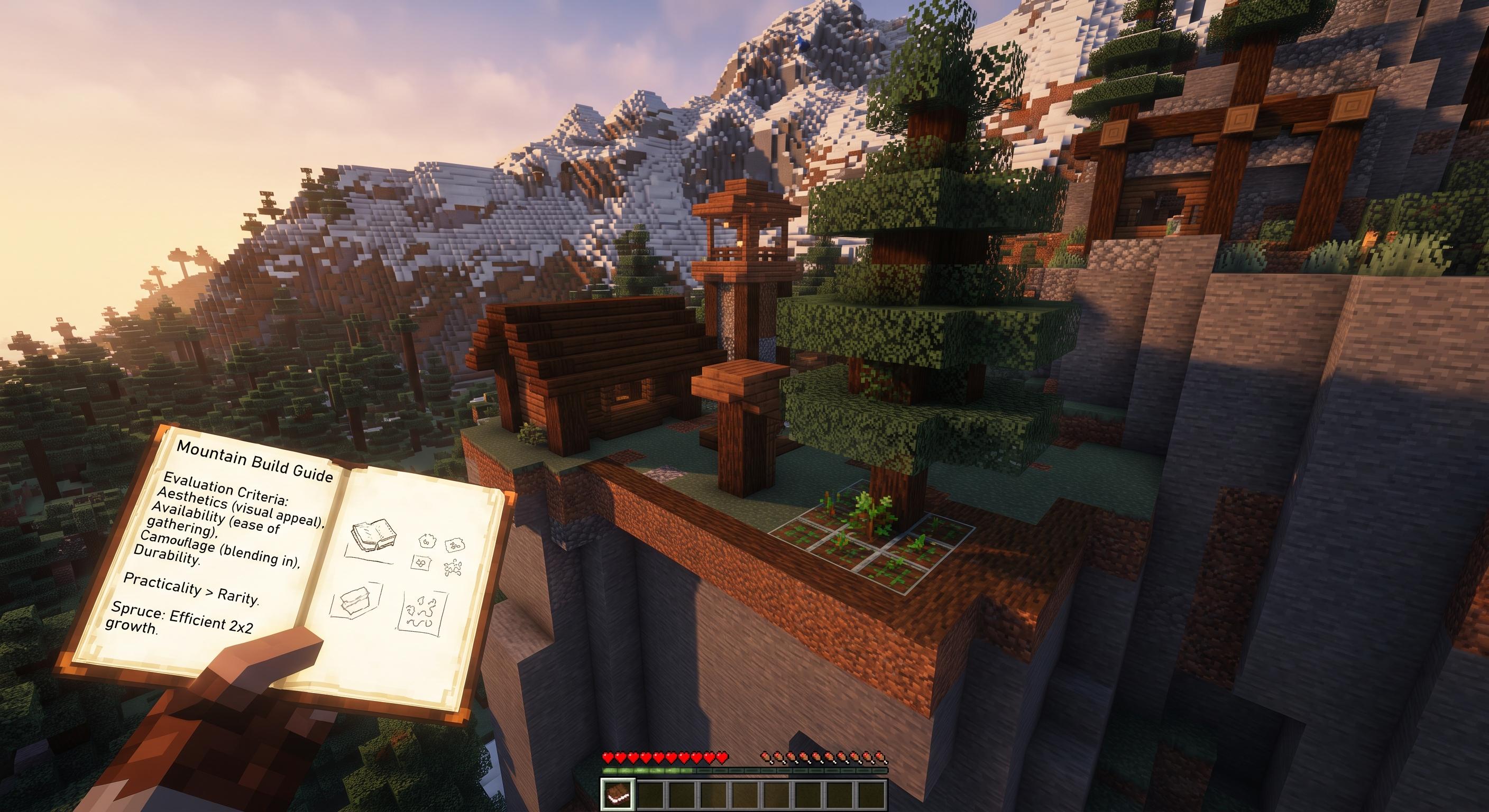
To pick the right wood for your mountain home, you must look at four evaluation criteria: aesthetics (how pretty it looks), availability (how easy it is to find), camouflage (how well it hides your base), and durability. Survival practicality should always be more important than rare aesthetics because running out of blocks on a steep cliff is dangerous. Spruce is especially efficient in survival since spruce saplings in a 2 x 2 grid can grow giant trees.
Here is a side-by-side comparison table to help you see the differences clearly:
| Wood Type | Main Color | Best Use Case | Where to Find It | Easy to Farm? |
|---|---|---|---|---|
| Spruce | Dark Brown | Roofs, Beams, Pillars | Taiga / Mountains | Very Easy (Giant Trees) |
| Oak | Neutral Tan | Starter Bases / Floors | Plains / Forests | Very Easy (Everywhere) |
| Dark Oak | Near Black | Trim / Contrast Lines | Dark Forest | Medium (Needs 2x2 space) |
| Cherry | Bright Pink | Balconies / Decor | Cherry Groves | Hard (Rare Biome) |
| Pale Oak | Muted Gray | Modern Floors / Interiors | Pale Garden | Medium (Special Biome) |
| Poplar | Pale Green/Tan | Neutral Mid-Tones | Modded Biomes Only | Dependent on Modpack |
| Spruce also stays practical in comparison because its logs can be crafted into four planks each, and it usually gives more building wood per tree than oak. |
Spruce Wood: Mountain Advantages
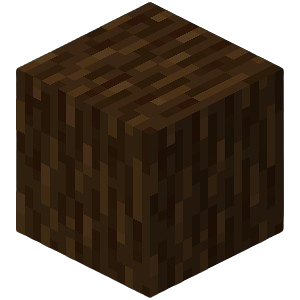
Spruce wood has a deep, rich brown color that provides natural camouflage benefits against dark mountain rock and gray stone. It is highly available because spruce trees generate in taiga and mountain-adjacent areas, where they are often found in reliable clusters for farming.
It can fit naturally into cold, rocky builds and makes mountain houses look grounded in the terrain. The most common build uses for spruce include thick roof trims, heavy support beams, and solid log accents that make a base look sturdy. Stripping spruce with an axe is useful when you want extra texture detail on beams or walls.
Oak: Starter-Friendly Mountain Wood
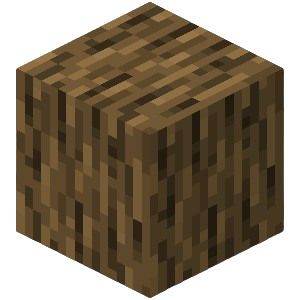
Oak is famous for its ubiquity and easy early-game access, and oak trees are available in almost every biome. Unlike oak, darker woods are usually chosen more for contrast than for day-one accessibility.
If you use it on a mountain, we advise using stripped oak logs to reduce visual noise on your walls. We propose using oak mainly for temporary platforms, ladders, and quick shelters while you gather stronger materials.
Dark Oak: Bold Accents and Contrast
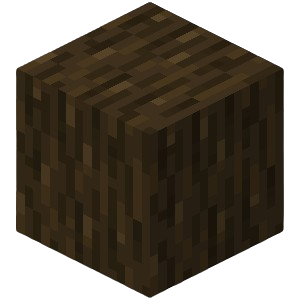
We highly recommend dark oak if you need bold trim and sharp interior contrast against your walls. However, we must warn you about limited dark oak biome access, as Dark Forests can be rare and dangerous to explore early on. For the best visual results, suggest pairing dark oak with light stone blocks like Diorite or Calcite.
Cherry Wood: Cosmetic Mountain Touches
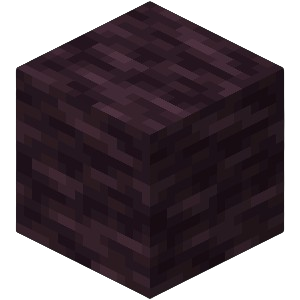
Cherry wood features unique pink tones that add a bright, cosmetic pop to aesthetic builds. Cherry is decorative, while birch is ideal for modern-design structures if you want a cleaner style.
We suggest using cherry sparingly for decorative balconies, window flower boxes, and indoor furniture. We caution players on cherry scarcity because Cherry Grove biomes are rare and do not spawn near every mountain range.
Pale Oak: Modern Mountain Builds
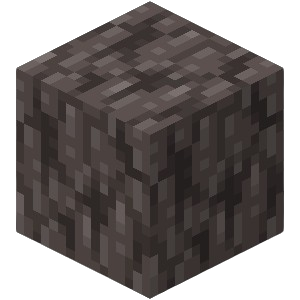
Pale oak works beautifully as a clean alternative to birch wood for flooring in clean interiors. We advise using pale oak when you want to design clean, muted interiors that feel quiet and calm. We recommend combining pale oak with dark stone blocks like Deepslate or Obsidian for a sleek, modern look.
Poplar (Mods/Texture Packs): When to Use
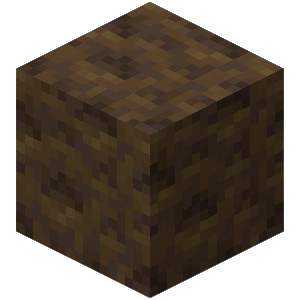
We must clarify that poplar wood is entirely modded or dependent on custom texture packs, so you will not find it in the vanilla game. We recommend poplar for players who want neutral, soft mid-tones that vanilla wood does not offer, with a pale, amber-gray look that can stand out sharply against dark stone in modded mountain builds.
Players can experiment with poplar when they want a softer modded palette than standard vanilla woods. Always remember to note mod compatibility before trying to load a poplar build into a standard vanilla world.
Best Wood Types by Use Case
-
For Camouflage-Focused Bases: Use Spruce Wood. Its color blends perfectly into dark mountain cliffs and shadows.
-
For Starter Survival Bases: Use Oak Wood. It is right there when you spawn and requires zero travel to farm.
-
For High-Contrast Decorative Bases: Use Dark Oak Wood paired with bright stone. It creates sharp, beautiful outline vectors.
-
Mixed-Wood Strategy: For complex builds, use Spruce for the outer structure, Oak for the indoor floors, and Dark Oak for the furniture doors and trims.
Survival Bases: Practical Mountain Building Tips
Mountain survival requires smart planning to avoid accidents. Always place your base entrances facing natural ledges so you do not walk out and fall down a cliff. Use raw spruce logs as your primary structural material because their thick bark texture looks strong enough to hold up a mountain house.
This is an efficient survival choice because spruce gives lots of building material quickly on mountain starts. Craft compact storage systems using chests and barrels to conserve your indoor wood space. Finally, build layered stone terraces outside to light up the area and prevent hostile mob spawns on dark ledges.
Functional Details for Survival Builds
For a great roof, we advise using spruce stairs to create sharp, sloped angles that look like they can shed heavy mountain snow. We recommend placing spruce trapdoors over your windows to act as functional shutters against mountain storms.
Lastly, always suggest placing fences or stone walls along your walkways to serve as cliff-edge safety rails so you do not slip off while running.
Design Recipes: Material Combos and Accents
-
The Realism Combo: Pair spruce planks with cobblestone and deepslate blocks to create a realistic, heavy mountain lodge.
-
The Modern Look: Pair pale oak planks with smooth stone blocks to create a bright, clean winter cabin.
-
The Structural Look: Use dark oak logs strictly for vertical pillars, roof beams, and main door frames to create a strong skeleton line.
-
The Color Pop: Add small cherry wood fences, pressure plates, and buttons to add tiny dots of pink color to gray stone walls.
-
The Warm Accent: Use jungle wood when you want a classic, orangish-hued accent in a warmer mountain palette.
-
The Rich Accent: Try mangrove wood for a deeper reddish-brown detail in fantasy builds, though it depends on the right swamp biome location.
Common Build Problems and Fixes
-
The Floating Roof Fix: If your roof looks like it is floating off the cliff side, fix it by adding visible log support pillars that connect down to the solid mountain stone.
-
The Boring Wall Fix: If your walls look repetitive and boring, reduce the flat texture by mixing in a few blocks of stripped logs or different planks of a similar color, and test other blocks in the same wood tone before rebuilding the whole wall.
-
The Lost Path Fix: Improve your path visibility during blizzards or dark nights by hiding light sources (like frog sights or torches) under carpet paths and moss blocks.
Building Ideas and Tutorials (Include More Posts)
Small Mountain Cabin Tutorial
-
Clear a 7x7 flat space on a mountain ledge.
-
Build a frame using four upright Spruce Logs at the corners.
-
Fill the walls with Cobblestone, leaving spaces for glass windows.
-
Add a high, pointed roof using Spruce Stairs that extends one block past the walls.
-
Use extra spruce logs you have crafted into stairs, slabs, and planks for porch and roof detail without changing the cabin style.
Mountain Lodge Step-by-Step Plan
-
Dig a large room directly into the side of a stone mountain.
-
Replace the cold stone floor with warm Oak Planks.
-
Place heavy Dark Oak beams across the ceiling to look like roof supports.
-
Build a large balcony out of Spruce Fences hanging over the valley below.
Hidden Cliff Base Blueprint
-
Find a completely vertical cliff wall.
-
Dig a hidden tunnel entry behind a natural water flow or waterfall.
-
Use Pale Oak inside to keep the hidden underground rooms bright without using too many torches.
-
Carve out tiny 1x1 window slits in the stone cliff face to look out safely.
Conclusion: Choosing The Best Wood
To summarize, Spruce is your best overall pick for snowy or rocky mountain peaks, Oak is the winner for fast survival starts, and Dark Oak provides the best decorative trim; spruce and oak remain the most reliable choices because they are found in familiar survival areas, while modded poplar is more niche. We urge readers to test these wood textures inside a creative world to see how they look against the stone before building in survival.
FAQs
Does poplar wood exist in vanilla Minecraft?
No. Poplar wood does not exist in the normal vanilla version of Minecraft. Vanilla players after a similar light custom look usually need mods, because poplar has not been added to the base game. You can only get it by installing specific environmental mods or custom texture packs.
What is the best wood for a snowy mountain versus a rocky mountain?
For a snowy mountain, Spruce is best because its dark color stands out beautifully against white snow. For a rocky mountain, Oak or Pale Oak works well to bring a warm, bright contrast to dark gray stone. bamboo and jungle woods can work as stylistic accents, and acacia is another nonstandard option, but they are less standard for mountain bases. Crimson and warped blocks are mostly niche Nether choices for advanced builds that want unusual color contrast.