What Is A Sulfur Cube In Minecraft?
Discover the uses and features of the Sulfur Cube in Minecraft, and learn how to make the most of this unique item. Read more to enhance your gameplay!

Shahrukh Sial is a Gaming Content Strategist at Sparked Host. He identifies his own strategic outlines through deep research to cover game guides, tips, and updates that help players improve their skills and enjoy a better gaming experience.
The Sulfur Cube stands out as one of the most innovative mobs ever introduced to Minecraft, blurring the lines between a living creature and a versatile engineering tool. Found deep within the treacherous sulfur caves, these unique entities possess the ability to consume full-sized blocks and transform their own physical properties accordingly. This adaptability turns each cube into a dynamic component for your world.
Beyond their simple appearance, these mobs act as a compact physics engine capable of being launched like projectiles or utilized as programmable explosive devices. Whether you are experimenting with their distinct block-absorption archetypes or designing automated transportation systems that rely on their bounce mechanics, the gameplay opportunities are nearly endless. They provide a fresh experience for players who enjoy pushing the boundaries of survival and redstone logic.
Mastering the Sulfur Cube requires more than just basic combat skills, as you must learn to manage their growth, splitting mechanics, and explosive potential. This guide will walk you through the essential traits of these creatures, from their natural spawning patterns to their advanced uses in complex redstone contraptions. Prepare to unlock a completely new layer of creativity in your survival adventures.
Section 1: Sulfur Cube Origin and Unique Traits
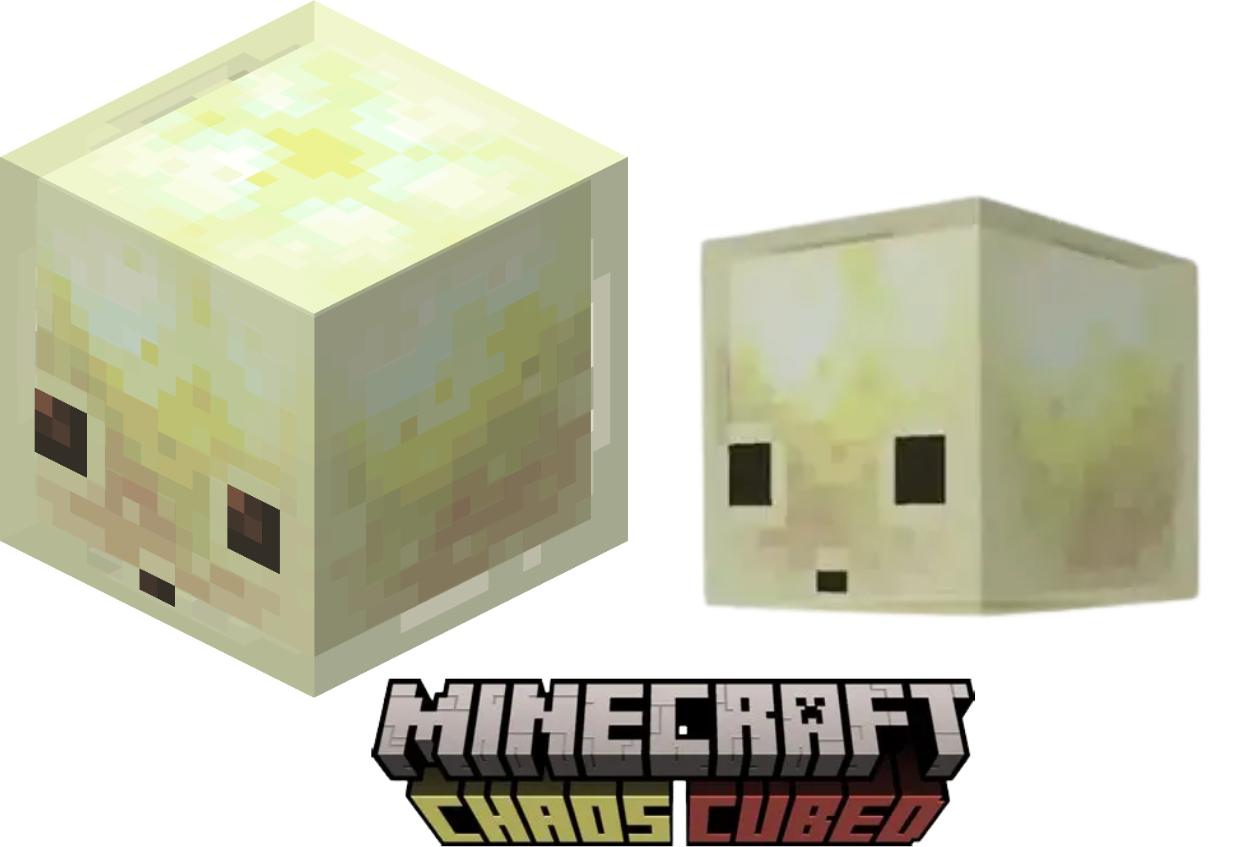
The Sulfur Cube is a bucketable, jumping passive mob that spawns naturally in the sulfur caves biome at any light level, and it also has a 32 percent chance of spawning in dark areas there. These creatures come in two distinct sizes:
-
Large Sulfur Cubes: 8 HP (4 hearts), approximately 1 block in size.
-
Small Sulfur Cubes: 4 HP (2 hearts), approximately 0.5 blocks in size.
The Splitting Mechanic
When a large Sulfur Cube dies (except from its own explosion), it splits into two small Sulfur Cubes. These small versions cannot absorb blocks but will naturally grow into large cubes after 20 minutes. Players can speed up this process by feeding them slimeballs or prevent growth entirely with golden dandelions.
The Block Absorption Feature
The defining characteristic of large Sulfur Cubes is their ability to use block absorption on full-sized blocks only, so walls, stairs, and slabs do not work. This system creates 12 distinct archetypes based on the absorbed block. Once a block is absorbed:
-
The cube becomes immobilized.
-
It gains significant damage resistance to most attack types.
-
Instead of taking damage, it receives increased knockback from most attacks.
-
The absorbed block's properties completely change the cube's physical behavior.
Players can drop a valid full block on the ground for the cube to absorb it. In normal cases, shears can safely remove the block inside and recover it.
Section 2: Why It Matters in Gameplay
These cubes serve as more than just passive wildlife, functioning as essential components for advanced automation and physics manipulation. By leveraging their unique block absorption and response to external forces, players can transform simple mechanics into complex systems that redefine traditional mob interactions.
From acting as durable, damage-resistant shields in combat scenarios to serving as the core of intricate redstone-driven explosive traps, their versatility is unmatched. Integrating them into your world allows for creative problem-solving that standard game mechanics simply cannot replicate, making them a cornerstone for any serious engineer or adventurer.
Redstone Engineering & Automation
Sulfur Cubes with TNT absorption create programmable explosive devices that can be triggered through multiple methods: flint and steel, fire damage, redstone signals, or nearby explosions. When ignited by another explosion, the fuse time randomly varies between 0.75-3 seconds, creating unpredictable chain reactions perfect for complex traps or demolition projects. Additionally, they can power custom mini-games and serve as components in redstone machines; for example, you can use one in a timed launcher or trap circuit.
Combat & Defense Applications
The damage resistance mechanic makes block-absorbing Sulfur Cubes immune to:
-
Melee attacks and projectiles.
-
Fall damage and explosions (except their own).
-
Poison, freezing, and contact damage from cactus/magma.
-
Most environmental hazards.
This makes them useful as mobile shields or test subjects for damage mechanics. However, they remain vulnerable to fire, suffocation, the Wither effect, and specific hostile mobs like Wardens (sonic boom attacks bypass immunity).
Physics Experimentation in Sulfur Caves
The launching mechanic allows players to create complex physics-based contraptions. When hit, Sulfur Cubes launch in the opposite direction of the impact point, so where you strike the cube’s body affects its movement, and unlike a slime or magma cubes, it can also jump unpredictably after impact. If fed a stone block, it behaves like a football and can bounce or be kicked around. Knockback and Punch enchantments increase launch distance. This creates opportunities for automated transportation systems and trigger-based puzzle mechanisms.
Player Tips
-
Never approach Sulfur Caves unprepared: These mobs spawn in groups of 2-4, and the low light makes them harder to spot before the caves turn dangerous.
-
Use shears, not weapons: If you want to recover absorbed blocks safely; the sole exception is ignited TNT. If left inside the cube, it still explodes after a short delay.
-
Bucket large cubes: To transport them without triggering splits.
-
Experiment with different block types: To discover unique physical properties; for example, wood and ice can both be absorbed, and feeding one a stone block makes it behave like a football. Only full blocks work, so place or drop the block first before the cube can absorb it.
-
Avoid igniting TNT cubes: Unless you want destruction, no small cubes spawn from explosive deaths.
-
Feed slimeballs to small cubes: To accelerate growth if you need large variants quickly.
-
Use golden dandelions strategically: To maintain small, non-absorbing variants.
Conclusion: Recap + Player Tips
The Sulfur Cube represents Minecraft at its most creative, a mob that transforms block properties into living mechanics. Whether you're building explosive contraptions, testing damage systems, or creating unique transportation methods, understanding these creatures opens new possibilities.
The Sulfur Cube isn't just a mob, it's a physics engine, a storage system, and an engineering tool wrapped in a passive creature. Master it, and you'll unlock some of Minecraft's most creative gameplay possibilities.