Differences Between Minecraft Sulfur Cubes in Java vs Bedrock Edition
Explore the key differences in sulfur cubes between Minecraft Java and Bedrock Edition. Enhance your gameplay by understanding these variations—read more!

Shahrukh Sial is a Gaming Content Strategist at Sparked Host. He identifies his own strategic outlines through deep research to cover game guides, tips, and updates that help players improve their skills and enjoy a better gaming experience.
The Minecraft community has been buzzing about the "Chaos Cubed" update, specifically the introduction of a bizarre new entity: the Sulfur Cube. This passive mob, found exclusively in the new Sulfur Caves biome, can absorb blocks and inherit their physical properties, turning your Minecraft world into a physics-defying playground.
However, for players trying to build cross-platform contraptions or simply understand the mechanics, there is a major issue. While the core concept exists in both Java Edition snapshots and Bedrock Edition previews, the implementation details differ significantly.
This guide breaks down exactly what works, what doesn't, and where the two editions diverge on physics, spawning, and block interactions.
What is the Chaos Cubed Update?
The Chaos Cubed update introduces the Sulfur Cube, a mob capable of absorbing full-sized blocks. Once a block is absorbed, the Sulfur Cube becomes immobile but gains the physical attributes of that block, such as bounciness, slipperiness, or even explosive properties.
While the feature set is intended to be consistent, the current snapshot (Java) and preview (Bedrock) versions have critical differences in how they handle physics engines and data tags. Below is a technical breakdown of these disparities.
Spawning Mechanics: Java vs. Bedrock
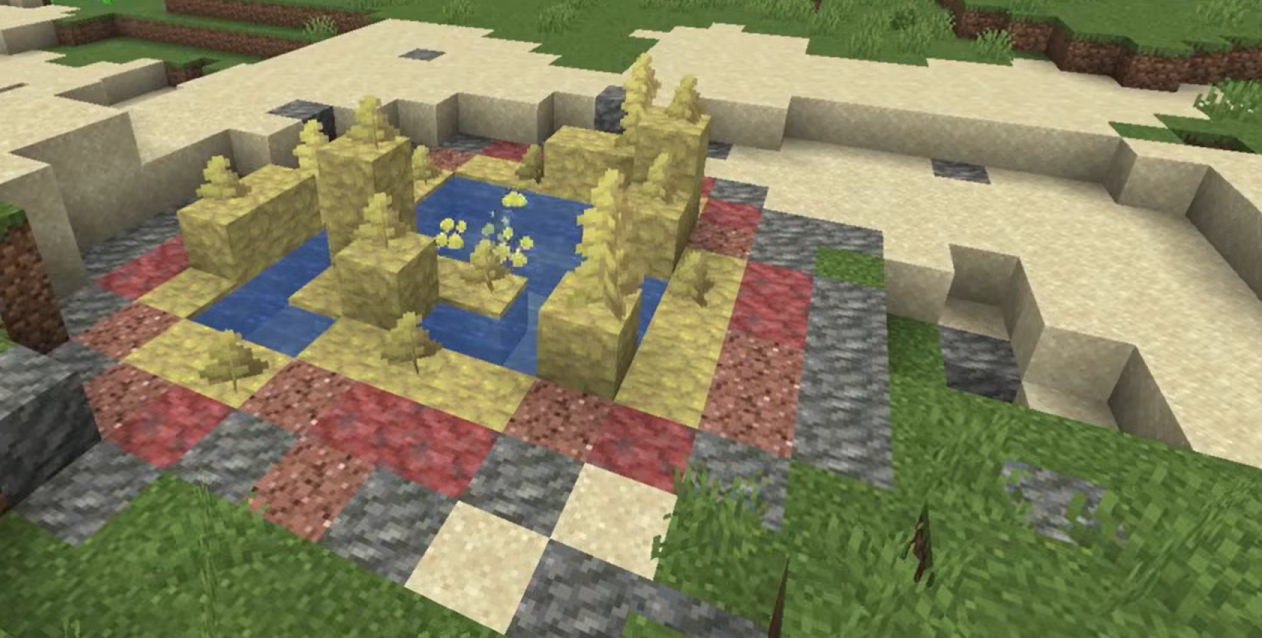
If you are looking to find these creatures, the rules are generally consistent, but the underlying math differs.
-
Location: Sulfur Caves only.
-
Light Level: They spawn at any light level in both editions.
-
Group Size: 2 to 4 entities per spawn attempt.
-
Spawn Weight:
-
Java Edition: Uses a spawn weight of 100 out of 315 (approximately 31.75% of the biome's spawn pool).
-
Bedrock Edition: Uses a spawn weight of 150.
-
Despite the different weighting numbers, the end result for players is similar: these mobs are common within their specific biome. There are no biome-exclusive blocks that alter spawning logic; the biome tag itself is the only requirement.
The Block List: What Can Be Absorbed?
The core of the Sulfur Cube's utility is its ability to absorb specific blocks. While the list of absorbable blocks is identical in content, the way the game code handles them is not.
Java Edition uses specific item tags like #sulfur_cube_swallowable and various archetype tags to determine behavior. Bedrock Edition uses a different set of tags prefixed with #minecraft:sulfur_cube_archetype_.
The Archetypes
Regardless of edition, the following block categories function as follows:
-
Bouncy: Bamboo products, logs, wood, and stripped wood. These make the cube highly elastic.
-
Explosive: TNT. This allows the cube to be ignited.
-
Fast Flat: Sponges, coral, moss, resin products, pumpkins, and melons. These reduce bounce and increase sliding.
-
Fast Sliding: Ice and snow products. These eliminate bouncing entirely for maximum slide.
-
High Resistance: Soul Sand and Soul Soil. These make the cube nearly impossible to push.
-
Hot: Magma Blocks. These cause the cube to damage nearby entities.
-
Light: Wool. This gives the cube "floaty" gravity properties.
-
Slow Bouncy: Stone and stone-like variants.
-
Slow Flat: Heavy metal blocks, ores, and ancient debris. These increase gravity and weight.
-
Slow Sliding: Mushroom blocks, mycelium, and wart blocks.
-
Sticky: Honeycomb Blocks. These prevent all sliding and bouncing.
-
Regular: Dirt, clay, concrete powder, and grass blocks. These result in standard sliding and bouncing behavior.
Critical Physics Differences
This is where the two editions diverge most dangerously for builders and redstone engineers.
Airborne Knockback
There is a confirmed discrepancy in how knockback is calculated when the entity is airborne.
-
Bedrock Edition: Sulfur Cubes that are in the air are knocked significantly further when launched.
-
Java Edition: Airborne knockback is restricted and does not propel the entity as far.
This difference stems from fundamental changes in the physics engines of the two platforms, including how air drag affects airborne motion and how far the cube travels when launched. If you are building a launcher or a cannon, your designs will not work identically across both versions.
Climbing Mechanics
-
Java Edition: If a Sulfur Cube with an absorbed block is launched into a ladder, vine, or other climbable block, it will pathfind and climb the structure.
-
Bedrock Edition: This behavior is not present. Launched cubes will not climb.
Special Behaviors and Damage Resistance
The "Hot" and "Explosive" Archetypes
Both editions support special interactions for specific blocks:
-
TNT (Explosive): Can be ignited via flint and steel, fire charges, fire damage, redstone signals, or nearby explosions. Manual ignition sets a 6-second fuse. External explosions set a random fuse between 0.75 and 3 seconds. Once ignited, the cube cannot be bucketed, damaged, or sheared.
-
Magma Block (Hot): The cube damages nearby mobs as if they were standing on a magma block.
Sulfur Cubes come in two sizes; when large sulfur cube dies, it will split into small sulfur cubes, and those absorbed block types can also create various effects.
Damage Resistance
When a Sulfur Cube absorbs a block, it becomes immune to many forms of damage. It is resistant to:
-
Melee attacks and projectiles.
-
Falling blocks (anvils, stalactites).
-
Explosions (except its own).
-
Fall damage.
-
Freezing, poison, and contact damage (cactus, magma, sweet berries).
It is NOT resistant to:
-
Fire and suffocation.
-
Cramming.
-
The Wither effect.
-
Warden sonic booms (though it is immune to the Warden's melee attacks).
Note that hostile mobs like Zoglins, the Wither, and Wardens will still target the cube. Tamed wolves will also attack the cube if their owner attacks it.
Item Interactions and Bucketing
Only large Sulfur Cubes can be picked up using an empty bucket, which highlights an important size-based difference. However, the behavior of the resulting item differs.
-
Naming:
-
Bedrock Edition: If you name the cube and bucket it, the item is named "Bucket of [Name]".
-
Java Edition: The item is named only "[Name]".
-
Tooltips: If the bucketed cube contains an absorbed block, the tooltip will display the name of that block unless the cube itself is named.
-
Despawning: Bucketed cubes do not count toward mob caps and do not despawn. However, if a bucketed cube is released or you drop it onto the ground before it splits into small cubes, those small cubes can despawn.
Redstone and Contraptions
Redstone engineers should be aware of the following limitations and capabilities:
-
Redstone Ignition: TNT-absorbing cubes can be primed by redstone signals. Interestingly, if a cube occupies the same space as a powered redstone component (even if that space isn't normally valid for TNT), it will prime.
-
Dispersers: You can use dispensers to force a cube to absorb a block or to remove a block using shears. Some experimental setups use new block sets from Sulfur Caves when building around cube interactions. block sets can also pair with bricks as decorative or structural choices for testing chambers.
-
Contraption Breaking: Due to the physics differences mentioned earlier (climbing and airborne knockback), contraptions designed in Java will likely fail or behave unpredictably in Bedrock, and controlling cube movement may require you to lead them into safe areas before testing cross-edition contraptions.
How to Test These Differences
If you want to verify these behaviors yourself, follow this protocol:
-
Set up identical worlds in the latest Java Snapshot and Bedrock Preview, and choose matching Sulfur Caves layouts with shallow pools of water and glow lichen before comparing behavior between editions.
-
Spawn a Sulfur Cube and feed it a Magma Block or a Bouncy block. A nearby cluster of sulfur spikes can help confirm the test area is correct.
-
Attempt to launch the cube while it is airborne to test knockback resistance.
-
Launch the cube at a ladder to test climbing mechanics.
-
Name and bucket a cube to observe the naming convention differences.
Conclusion and Call for Parity
The Sulfur Cube is an innovative addition to Minecraft, offering unique gameplay mechanics for both casual players and technical experts. However, the current disparity in physics handling and redstone interactions between Java and Bedrock editions creates a fragmented experience.
Specifically, the differences in airborne knockback and climbing mechanics break cross-platform compatibility for maps and minigames, even after sulfur caves were introduced in Minecraft Bedrock Edition 26.30. We encourage the community to report these inconsistencies officially. Achieving parity on these mechanics is essential for the health of the unified ecosystem.
For now, builders should design with the knowledge that their creations may behave differently depending on the platform their friends are using.