Facts About The Minecraft Straw Bed
Discover the mechanics of the 26.3 Straw Bed in Minecraft, including its single-use feature and how it doesn't reset.

Shahrukh Sial is a Gaming Content Strategist at Sparked Host. He identifies his own strategic outlines through deep research to cover game guides, tips, and updates that help players improve their skills and enjoy a better gaming experience.
Quick Response: Straw Beds are portable, single-use sleeping mats that were added in Minecraft 26.3.
They can be used to sleep throughout the night or to avoid being caught in the middle of a rainstorm which would cause a player's spawn point to be reset. They require three Hay Bales to be made and yield four beds. These beds vanish instantly upon use, their maximum number that can be carried in a player's inventory is 16, i.e., one stack, and they have been made with a purpose of providing a momentary rest during traveling rather than being used as the foundation for a home or permanent base.
They also appear as loot in naturally generated Abandoned Camps in 16 different biomes but if somehow players try to use them in the Nether or The End, these beds will explode.
Overview of straw bed Changes in 26.3
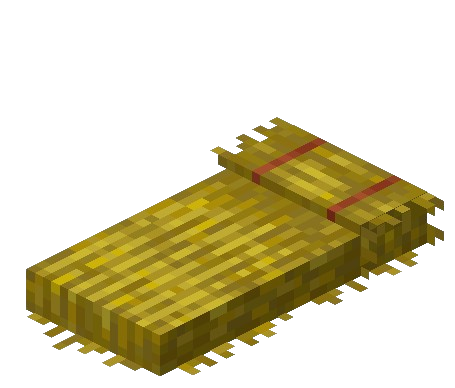
The Third Drop 2026 update introduces a new tier of sleeping accommodation that fundamentally changes how players approach exploration and temporary shelter. Unlike the traditional bed which has served Minecraft since the Beta days, the Straw Bed occupies a unique niche between permanent settlement and wilderness survival.
| Feature | Straw Bed | Regular Bed |
|---|---|---|
| Spawn Reset | No | Yes |
| Durability | Single use | Infinite |
| Stack Size | 16 | 1 (unstackable) |
| Villager Use | Ignored | Claimed |
| Nether/End | Explodes | Explodes |
| This distinction makes Straw Beds essentially "consumable beds" - perfect for the player who needs to skip a night in a distant cave or distant biome without the commitment of moving their respawn point or carrying heavy furniture back to base. |
Straw Bed Mechanics Explained
How They Differ from Regular Beds
While regular beds are furniture blocks that persist indefinitely and update your world spawn, Straw Beds function as temporary rest stops. The interaction begins identically: right-click during nighttime or thunderstorms to enter sleep. However, the outcome diverges dramatically upon waking.
The Vanishing Act
When the morning comes (or the storm passes), the Straw Bed does not remain as a placed block. Instead, it simply disappears - no particles, no dropped item, no trace that you ever rested there. This "break without dropping" behavior means you cannot pick it back up after use, nor can you move it to a new location once placed.
Destruction Methods
Straw Beds can be removed before use by breaking them by hand (instant break, no tool required), at which point they drop as an item. However, if you actually sleep in them, they vanish completely. They also explode with the same force as regular beds when placed and used in the Nether or End dimensions, dealing damage to nearby entities without dropping the bed item.
Crafting Straw Beds Using Hay Bales
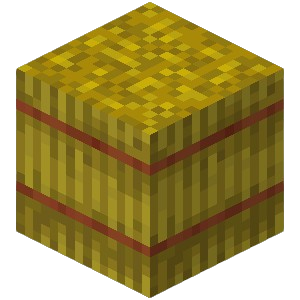
The recipe reflects the temporary nature of the bed - woven from dried grass rather than sturdy wood and wool.
Components Required:
-
3 Hay Bales (not wheat, not hay blocks - specifically Hay Bales)
-
Crafting Table (cannot be crafted in the 2x2 inventory grid)
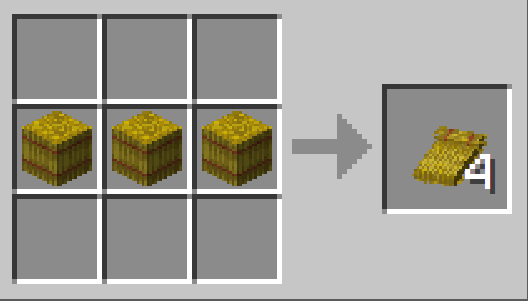
Recipe Layout: Place three Hay Bales in the middle horizontal row of the crafting grid:
| EMPTY | EMPTY | EMPTY | ||
|---|---|---|---|---|
| HAY | HAY | HAY | = | 4 Straw Beds |
| EMPTY | EMPTY | EMPTY | ||
| Yield: 4 Straw Beds per craft |
The Hay Bale Connection
Since each Hay Bale requires 9 Wheat to craft, creating Straw Beds demands significant agricultural investment. A full stack of 64 Wheat yields 7 Hay Bales (with 1 wheat left over), which converts into 8 Straw Beds with 1 Hay Bale remaining. This makes them mid-game items for established players with wheat farms, rather than early-game solutions for spawn-point-less beginners.
Single-Use Behavior of straw beds
Defining Single-Use
In gameplay terms, "single use" means the item is consumed upon activation. Unlike tools that lose durability or food that restores hunger, the Straw Bed simply ceases to exist after serving its function.
Immediate Aftermath
The moment you wake up from a Straw Bed:
-
The bed block disappears
-
Time sets to morning (or weather clears)
-
Your spawn point remains unchanged
-
The space where the bed sat becomes empty air
Multiplayer Implications
In multiplayer servers, Straw Beds create interesting social dynamics. Since they disappear after one person uses them, players cannot share a Straw Bed in sequence during the same night. The first person to sleep consumes the bed, leaving others to either craft their own or wait for morning. This encourages individual preparation rather than communal sleeping arrangements.
Simulating Repeated Sleeping
To achieve the effect of "sleeping multiple nights" while traveling, players must carry stacks of Straw Beds and place a new one each evening. With a stack of 16, you can survive just over two Minecraft weeks (16 nights) of continuous exploration before needing to restock.
No Spawn Point Reset: What Changes
The Spawn Point Stays Put
The most critical mechanic to understand sleeping in a Straw Bed does not update your respawn coordinates. If you die after using a Straw Bed, you will return to your last regular bed, your respawn anchor, or the world spawn point - never to the location where you used the Straw Bed.
Comparison With Regular Beds
| Action | Regular Bed Result | Straw Bed Result |
|---|---|---|
| Sleep at night | Sets spawn, skips to morning | No spawn change, skips to morning, bed vanishes |
| Break before use | Drops bed item | Drops bed item |
| Sleep then die | Respawn at bed location | Respawn at previous spawn (world spawn or last regular bed) |
| Use in Nether | Explodes | Explodes |
| Stack in inventory | No (unstackable) | Yes (up to 16) |
Respawn Anchor Interactions
Straw Beds do not interfere with Respawn Anchors in the Nether. Since they do not update your spawn point, using a Straw Bed in the Overworld will not overwrite a Respawn Anchor charge in the Nether, nor vice versa. This makes them safe to use during Overworld exploration even if you have a carefully positioned Nether spawn point that you wish to preserve.
Alternative Spawn-Setting Strategies
When using Straw Beds for travel, maintain a "spawn network" of regular beds at your main bases. Place a regular bed at your central hub to set that as your primary respawn, then use Straw Beds exclusively when venturing into unknown territory. If you die during exploration, you return to your main base rather than a dangerous forward position where you might not have gear to survive.
Straw Beds at Abandoned Camps
Natural Generation
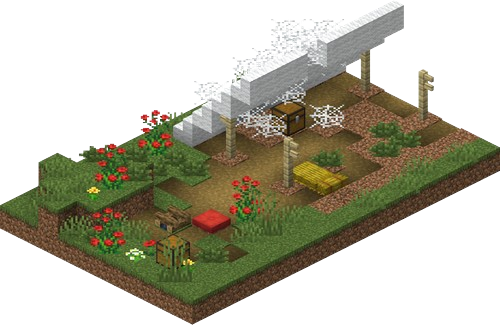
Abandoned Camps generate with Straw Beds as standard furniture in the Dappled Forest and 15 other biomes. These structures represent temporary waystations left by previous travelers, fitting the Straw Bed's lore as disposable resting spots.
Looting Strategy
When you discover an Abandoned Camp:
-
Check all chests first (they may contain additional Straw Beds or Hay Bales)
-
Harvest the Straw Beds by breaking them with your fist (instant break)
-
Note that camps in the Dappled Forest specifically generate with higher concentrations of Straw Beds (typically 2-4 per camp) compared to other biomes
Mob Warning
Abandoned Camps are not safe zones. Hostile mobs spawn around them at night, and the open design offers little protection. Do not attempt to sleep in camp-generated Straw Beds without first lighting the area and walling off entrances, or you may wake up to a Creeper explosion that negates the bed's safety anyway.
Interaction With Hay Bales And Nearby Blocks
Piston Behavior
Straw Beds behave as expected with pistons: they can be pushed and pulled by pistons and sticky pistons without breaking. However, since they are not renewable after use (unlike beds which can be picked back up), using them in piston contraptions is generally wasteful unless you are specifically creating a single-use trap or automated sleeping station.
Fire Risk
As Straw Beds are made from Hay Bale, they are fire hazards. Placing them beside lava, being struck by lightning, or igniting them deliberately will set them on fire. Regular Beds can catch fire but sometimes can be put out while burning Straw Beds completely burn the item. Do not place them near your fireplace design and use caution when placing them for a thunderstorm as lightning strikes can ignite your temporary shelter.
Note on Placement
Straw Beds take up two blocks of space, just like regular beds. They need to sit on solid blocks, though. You can't place them on transparent blocks such as glass or leaves, and floating in mid-air is not an option either.
Gameplay Tips and Survival Strategies
The Hybrid Sleep System
Establish a tiered approach to sleeping:
-
Base: Use a regular bed to set your permanent spawn
-
Forward Operating Base: Use a regular bed if you plan to stay in a biome for multiple days
-
Exploration: Use Straw Beds when caving or scouting to avoid moving your spawn into dangerous territory
Emergency Restocking
Keep a Shulker Box filled with Straw Beds in your ender chest. When your hotbar stack runs low, refill from the Shulker. This allows you to carry effectively 64+ beds without sacrificing inventory space for other essentials.
Cave Diving Protocol
When mining deep underground:
-
Place a Straw Bed in a secure, lit alcove
-
Sleep to skip the surface night (preventing mob spawns in your mine entrance)
-
Continue mining knowing that if you die, you respawn at your surface base rather than deep underground where you might be trapped
Shelter Construction
Near Abandoned Camps, build a quick dirt hut and place your Straw Bed inside. The camp provides aesthetic context, but the walls provide safety. In the morning, break the walls to reclaim your dirt and move on, leaving no trace of your passage.
Patch Notes, Known Bugs, And Reporting
Current Snapshot 1 Issues
-
Visual Glitch: Sometimes Straw Beds appear to remain placed after use (ghost block) until the chunk is reloaded. The bed is not actually present and cannot be interacted with.
-
Stacking Bug: Occasionally, sleeping in a Straw Bed while holding a stack of them in your hand may cause the entire stack to be consumed rather than just one bed.
-
Villager Pathfinding: Rarely, Villagers may attempt to pathfind to Straw Beds before realizing they cannot use them, causing temporary lag spikes in villages near Abandoned Camps.
Reporting Procedures
If you encounter these or other issues:
-
Reproduce the bug in a fresh Creative world
-
Document coordinates and exact steps
-
Submit to the official Minecraft Bug Tracker with the tag [26.3-snapshot-1]
-
Include whether you were playing single-player or multiplayer, as the stacking bug appears more frequently in LAN worlds
Future Predictions
Based on current mechanics, expect potential tweaks to:
-
Drop Rate: May change to drop Straw (wheat item) on destruction to allow partial resource recovery
-
Villager Interaction: May be updated to allow Farmers to "restock" using Straw Beds, or explicitly pathfind away from them
-
Explosion Physics: The Nether/End explosion may be adjusted to be less powerful than regular beds, reflecting the "improvised" nature of straw construction